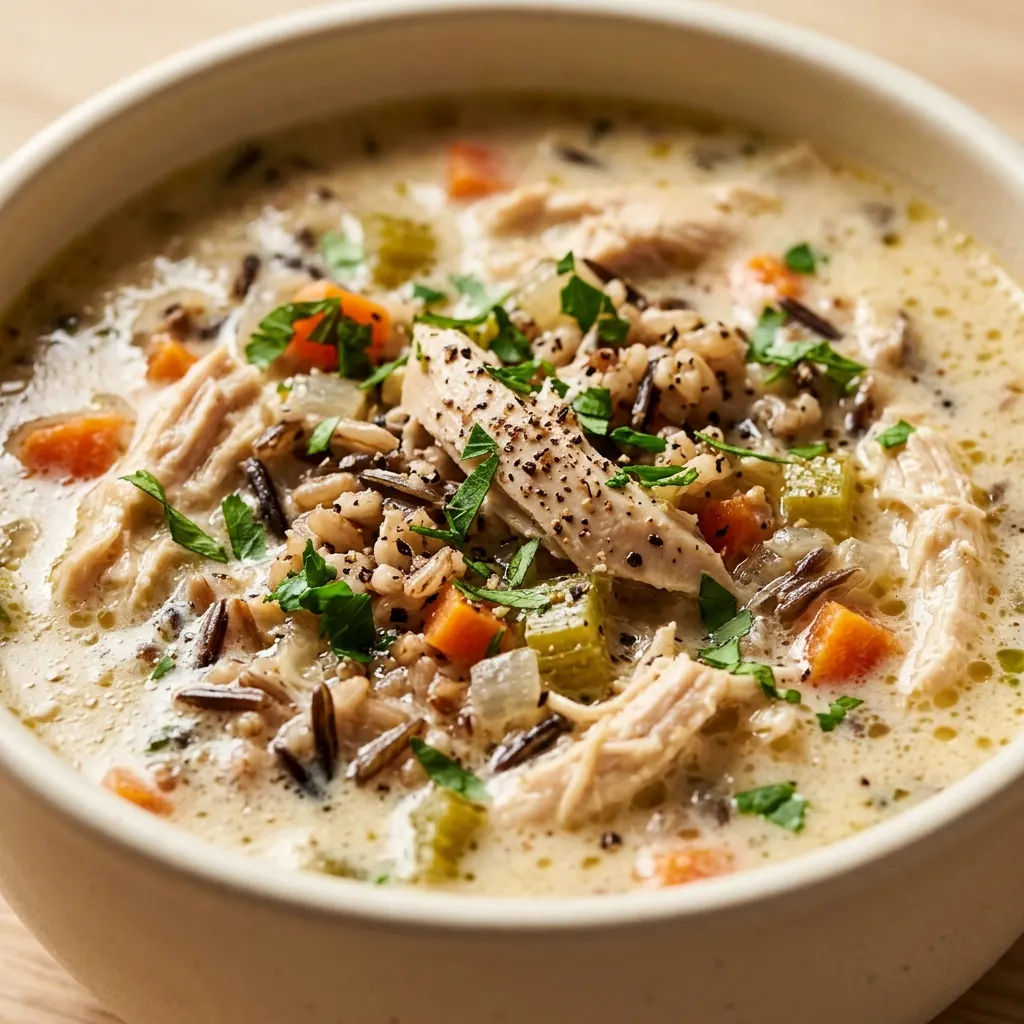
Best Creamy Chicken and Wild Rice Soup Cozy Winter Bowl
This chicken and wild rice soup recipe came together on a night when the fridge had half a rotisserie chicken, a lonely bag of wild rice blend from the back of the pantry, and not much else that looked like dinner. It seemed like an easy combination chicken, rice, some vegetables, a creamy base and the first attempt mostly delivered on that, except for one problem: by the time it was reheated the next day for lunch, the rice had swollen and gone soft enough that the whole bowl looked more like porridge than soup.
That texture issue turned out to be almost entirely about timing rather than ingredients. Wild rice keeps absorbing liquid even after it’s technically cooked, which means a soup that looks perfectly balanced on night one can turn thick and starchy by night two if the rice sits in it the whole time. The fix was simple once it was clear what was actually happening cook the rice mostly separately, and control exactly how much of it ends up soaking in the broth long-term.
Here’s the full method, including the fix for the mushy-rice problem and the cream-curdling issue that showed up in early testing.
Why Rice Timing Matters More Than Anything Else in This Soup
Wild rice, and most wild rice blends, behave differently from white rice once they hit hot liquid. They keep absorbing moisture well past the point where they’re cooked through, swelling and releasing starch the longer they sit which is exactly what turns a soup thick and gluey rather than staying pleasantly creamy.
Cooking the rice separately, then adding a controlled amount into the finished soup, solves this almost entirely. It means the rice is fully cooked and tender without continuing to bloat inside the pot, and it also means any soup that isn’t eaten right away doesn’t turn into a bowl of rice pudding by the next day. This one adjustment rice cooked apart, then combined is the single biggest difference between a soup that holds up over a few days and one that doesn’t.
About This Recipe
This soup was tested with the rice cooked directly in the broth, with the rice cooked entirely separately and added at serving time, and with a middle-ground method where the rice cooks apart but joins the soup for a short final simmer. The middle-ground method won clearly the rice picks up flavor from the broth without overcooking, and the soup reheats far more predictably as leftovers.
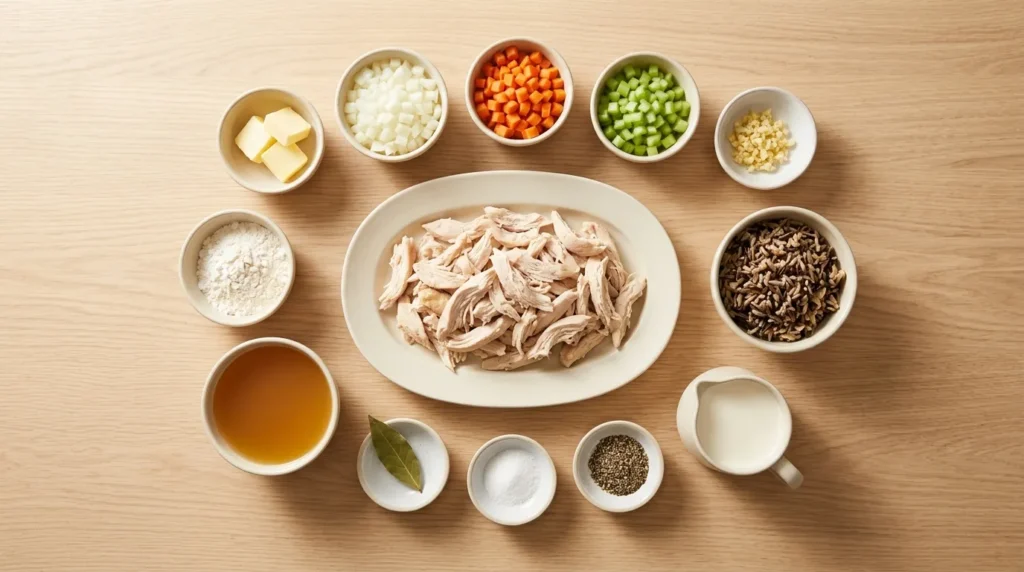
Ingredients
For the Soup Base:
- Butter — 3 tbsp
- Yellow onion — 1 medium, diced
- Carrots — 2 medium, diced
- Celery — 2 stalks, diced
- Garlic — 3 cloves, minced
- All-purpose flour — 3 tbsp
- Chicken stock — 1.2 litres
- Cooked chicken — 400g, shredded (rotisserie or leftover works well)
- Wild rice blend, cooked separately — 300g cooked (about 100g uncooked)
- Heavy cream — 250ml
- Dried thyme — 1 tsp
- Bay leaf — 1
- Salt and black pepper — to taste
- Fresh parsley — small handful, chopped, for garnish
Ingredient Substitutions
Pure wild rice can replace a wild rice blend, but it takes noticeably longer to cook (closer to 45 minutes than 30) and has a chewier bite even when fully done worth knowing before swapping it in on a night with limited time.
Raw chicken can be used instead of cooked or rotisserie chicken. Cut it into bite-sized pieces and add it during the simmering stage. Cook until the thickest piece reaches 165°F (74°C) on an instant-read food thermometer before continuing with the cream. Do not rely on the estimated 12–15 minute cooking time, color, or texture alone, since chicken pieces can vary in size. USDA safe minimum cooking temperatures
Half-and-half can replace heavy cream for a lighter version, though the soup won’t be quite as rich or as thick without a slightly longer simmer to compensate.
No fresh thyme or dried thyme on hand? A pinch of poultry seasoning is a reasonable stand-in, though the flavour profile shifts slightly toward something more generically herby.
Step-by-Step Instructions
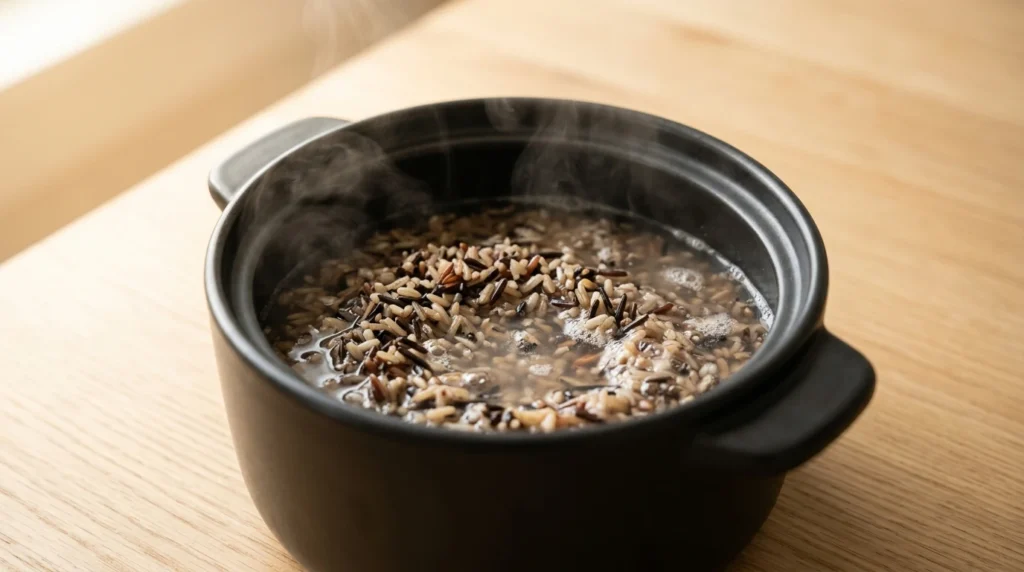
Step 1: Cook the Rice Separately
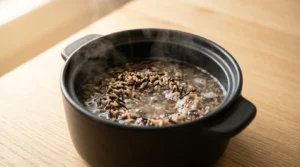
Cook the wild rice blend according to the package instructions in a separate pot, using water or a portion of the chicken stock for extra flavour. Set aside once tender. This separate step is what prevents the rice from over-absorbing liquid and turning the finished soup gluey.
Step 2: Build the Base
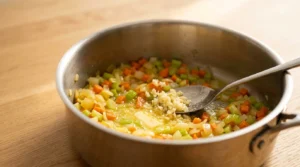
Melt butter in a large pot over medium heat. Add onion, carrots, and celery, and cook for 5 to 6 minutes until softened. Add garlic for the final minute, stirring so it doesn’t catch and burn.
Step 3: Make the Roux
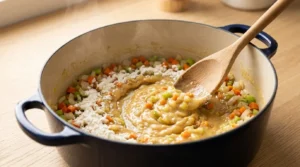
Sprinkle flour over the vegetables and stir constantly for 1 to 2 minutes, coating everything evenly and cooking out the raw flour taste before any liquid is added.
Step 4: Add Stock
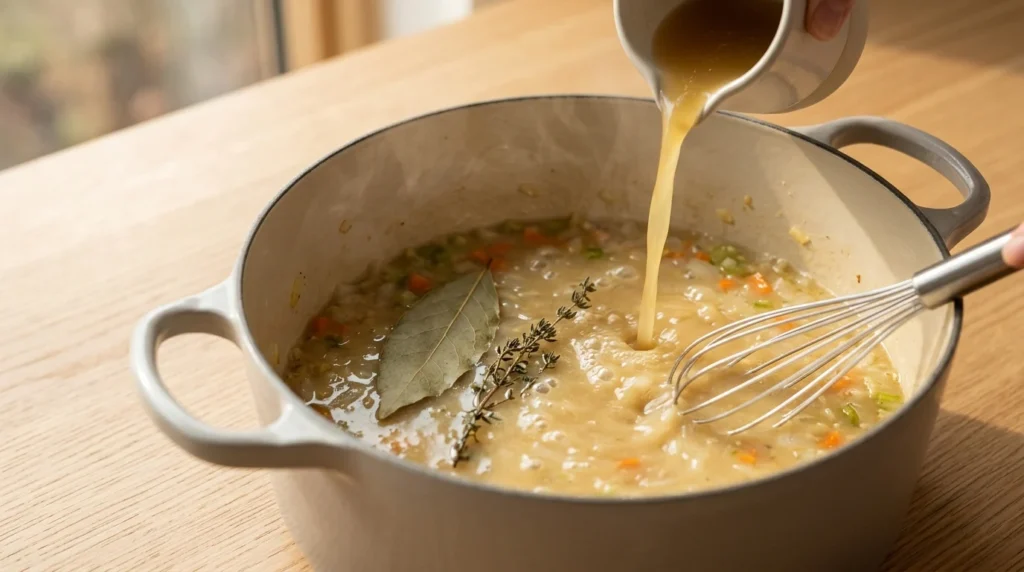
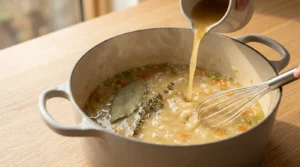
Slowly pour in the chicken stock while stirring, scraping up any browned bits from the bottom of the pot. Add thyme and the bay leaf. Bring to a gentle simmer and cook, uncovered, for 15 minutes.
Step 5: Add Chicken and Rice
Stir in the shredded cooked chicken and cooked wild rice. If using raw chicken, make sure the thickest piece reaches 165°F (74°C) on an instant-read thermometer before proceeding. Simmer the cooked chicken and rice for about 5 minutes, just long enough to heat everything through without overcooking the rice.
Step 6: Add the Cream
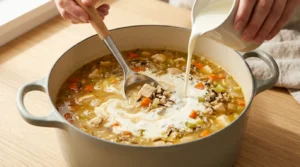
Reduce the heat to low before adding the cream this matters, since cream added over higher heat is more likely to curdle or separate, especially in a soup that already contains some acidity from the vegetables and stock. Stir in the cream gently and warm through for 2 to 3 minutes without letting it come to a boil.
Step 7: Finish
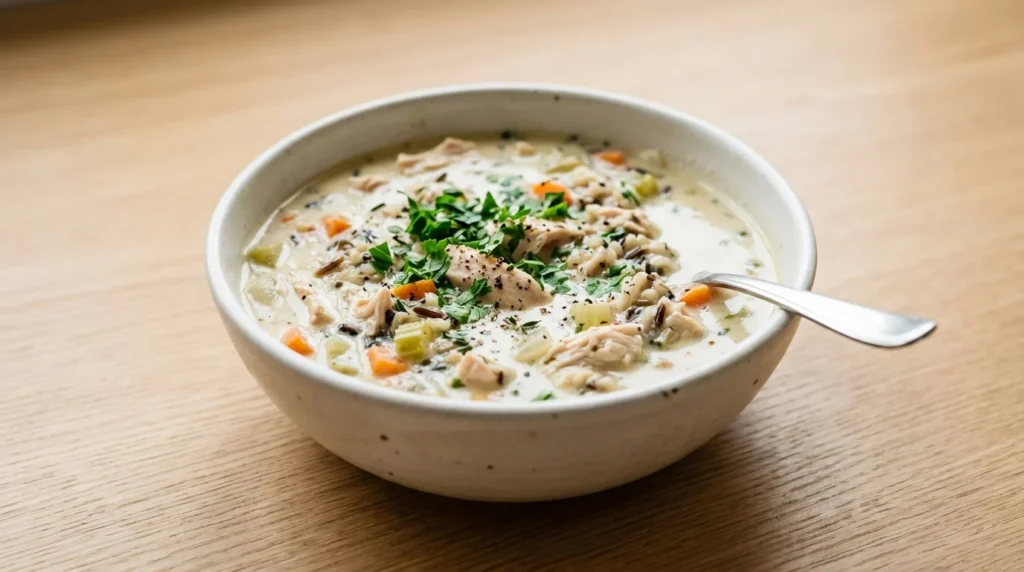
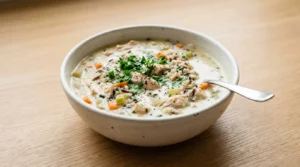
Remove the bay leaf, taste, and adjust salt and pepper. Garnish with fresh parsley before serving.
What Went Wrong in Early Testing
Round 1: Cooked the rice directly in the soup from the start.
By the time the soup was ready, the rice had absorbed most of the broth and turned the texture thick and starchy rather than broth and creamy. Leftovers the next day were nearly solid. Lesson: cooking the rice separately and adding it later is not optional if the goal is a soup that reheats well.
Round 2: Added the cream over high heat, straight after the stock came to a boil.
The cream visibly separated into small curdled flecks within a minute, giving the soup an unappetizing, slightly broken look even though the flavor was fine. Reducing the heat to low before adding the cream solved this completely.
Round 3: Used raw chicken breast added late in the simmer, assuming a quick cook time.
The chicken pieces stayed slightly underdone in the center by the time the rest of the soup was ready, since the pieces were larger than expected. Cutting the chicken smaller and simmering it earlier fixed this, though using pre-cooked chicken from the start remains the simpler option.
Round 4: Froze the finished soup with the rice already fully incorporated.
After thawing, the rice had turned notably mushy and the texture of the broth had changed, becoming thicker and slightly grainy. Freezing the soup base separately from the rice, and adding freshly cooked rice on reheating, avoided this issue entirely.
Round 5: Tried thickening with cornstarch instead of a flour roux, added at the same early stage as the roux would go in
The cornstarch needed to be added much later in the process to work properly added early, alongside the vegetables the way flour is, it never fully activated and the soup stayed thin until a second dose was added near the end. Cornstarch works well as a thickener here, but only when added as a slurry in the final few minutes, not swapped in one-for-one at the roux stage.
Rice Cooked In Broth vs Cooked Separately Comparison
| Method | Texture on Day 1 | Texture as Leftovers | Best For |
|---|---|---|---|
| Cooked Directly in Broth | Soft, broth-infused | Thick, starchy, can turn gluey | A single-serving meal eaten right away |
| Cooked Separately, Added Later | Tender, holds shape | Stays close to original texture | Meal prep and multi-day leftovers |
Wild Rice vs Wild Rice Blend Cook Time and Texture
| Type | Cook Time | Texture | Notes |
|---|---|---|---|
| Pure Wild Rice | ~45 minutes | Chewy, firm even when done | Stronger, nuttier flavour |
| Wild Rice Blend (with white/brown rice) | ~25-30 minutes | Softer, more tender | More common in supermarkets, faster to cook |
Pro Tips
- Cook the rice separately, always. This one habit is what keeps the soup from turning into rice pudding by day two.
- Lower the heat before adding cream. Cream added to an actively boiling soup is far more likely to curdle than one added to a gently warmed pot.
- Use rotisserie chicken when possible. It cuts real time off the recipe and tends to have more flavour than chicken poached plainly in water.
- Don’t skip the roux step, even though it feels like an extra few minutes it sets up the base thickness before the cream ever goes in.
- Taste before adding extra salt. Depending on the stock used, the soup may already be well-seasoned before any additional salt is added.
Variations
Mushroom and Wild Rice Soup: Add 200g sliced mushrooms with the onions and carrots for a deeper, earthier flavour that pairs naturally with wild rice.
Lighter Version: Swap the heavy cream for half-and-half and reduce the butter slightly, accepting a thinner but still creamy result.
Turkey and Wild Rice Soup: Swap the chicken for leftover turkey a natural fit for the days after a big roast dinner.
Spicy Wild Rice Soup: Add a pinch of cayenne or a diced jalapeño with the vegetables for a subtle background heat.
Herb-Forward Version: Add a bay leaf plus a small sprig of fresh rosemary alongside the thyme for a more pronounced herbal note.
Meal Prep and Scaling Notes
This soup is a strong meal-prep candidate as long as the rice-separately rule is followed. Store the rice in its own container and the soup base in another, combining only the portion being eaten each time this keeps every serving tasting like it was made fresh rather than gradually turning thicker and starchier across the week.
Scaling the recipe up for a larger batch works well for the vegetable and broth base, but the rice should still be cooked in a separate pot regardless of batch size doubling the rice in with a doubled broth base doesn’t change the core problem, it just delays it slightly. For a crowd, it’s often easier to cook one large batch of rice and portion it out fresh into bowls as the soup is served, rather than trying to keep a huge pot of finished soup at the right consistency for hours.
What to Serve With
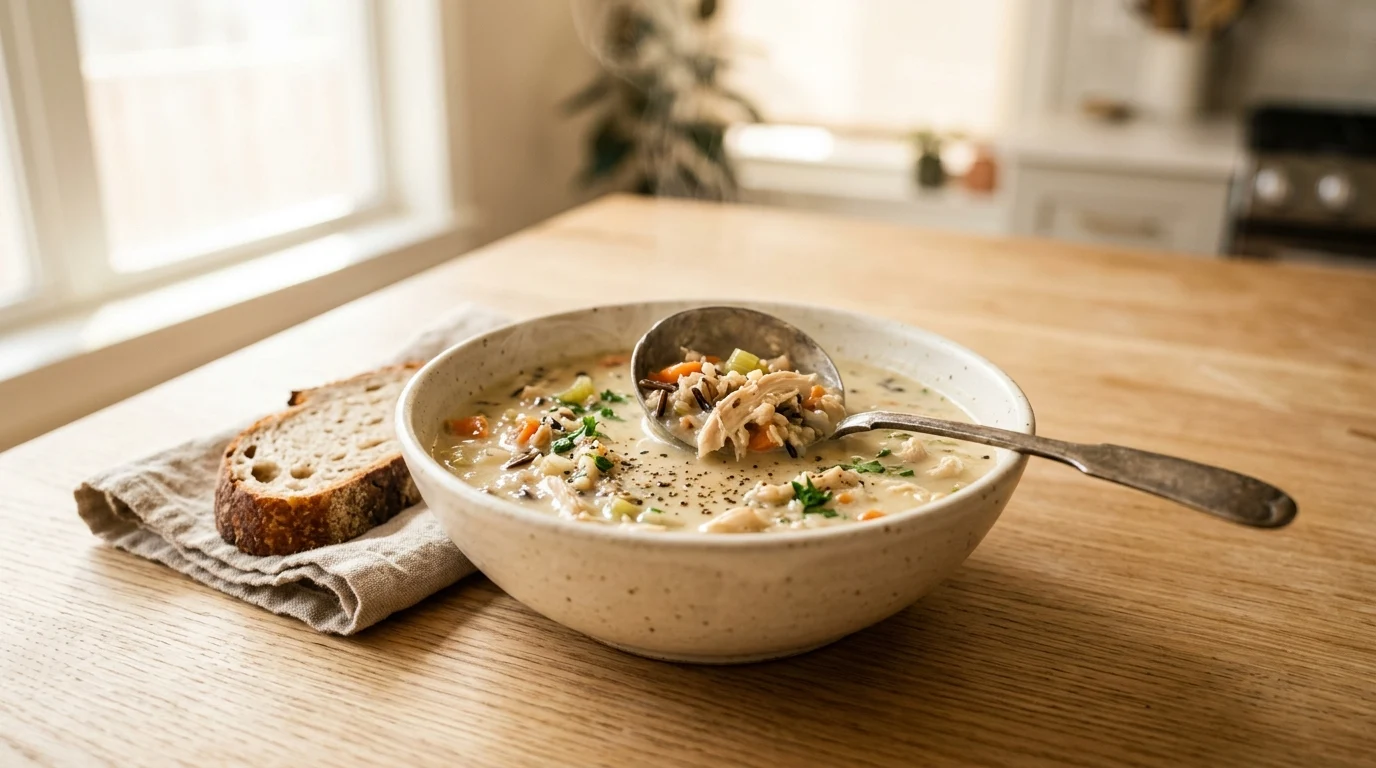
- Crusty bread or dinner rolls, for the broth
- Best Homemade Chicken Soup From Scratch — Winter Healing — for another cold-weather, base-first soup method
- Best Hearty Chicken Stew — One-Pot Winter Comfort — for a thicker, heartier one-pot option
- Best Creamy White Chicken Chili — Easy One Pot Fall — another creamy, spiced one-pot favorite
- Best Garlic Herb Roast Chicken — a good source of the leftover chicken this soup is built around
- A simple green salad, for a lighter contrast alongside the rich broth
Storage and Reheating
Fridge: Refrigerate leftover soup within 2 hours of cooking, or within 1 hour if the room temperature is above 90°F (32°C). Store at 40°F (4°C) or below and use within 3–4 days. Store the soup and rice separately when possible for better texture.
Reheat (stovetop): Reheat over low to medium-low heat, stirring occasionally. Add extra stock or a little milk if the soup has thickened. Continue heating until the soup and chicken reach 165°F (74°C) internally.
Reheat (microwave): Cover loosely and heat in short intervals, stirring halfway through for even heating. Continue until the soup and chicken reach 165°F (74°C) internally.
Freeze: Freeze the soup base without the rice for the best texture. Thaw in the refrigerator and reheat thoroughly to 165°F (74°C) before serving. Add freshly cooked rice after reheating.
Best Creamy Chicken and Wild Rice Soup Cozy Winter Bowl
Ingredients
Equipment
Method
- Cook the Rice Separately Cook the wild rice blend according to package instructions in a separate pot. Set aside.
- Cook the Vegetables Melt butter in a large pot. Cook onion, carrots, and celery for 5 to 6 minutes. Add garlic for the final minute.
- Make the Roux Sprinkle flour over vegetables, stir constantly for 1 to 2 minutes.
- Add Stock Slowly stir in stock, add thyme and bay leaf. Simmer uncovered for 15 minutes.
- Add Chicken and Rice Stir in shredded chicken and cooked rice. Simmer 5 more minutes.
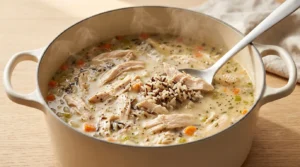
- Add Cream Lower heat, stir in cream gently, warm through 2 to 3 minutes without boiling.
- Finish Remove bay leaf, adjust seasoning, garnish with parsley.
Notes
Nutrition Info (per serving, based on 6 servings)
| Nutrient | Amount |
|---|---|
| Calories | 356 |
| Protein | 24g |
| Fat | 18g |
| Carbohydrates | 27g |
| Sodium | 610mg |
| Fiber | 2g |
| Sugar | 4g |
Nutrition information is an estimate and may vary depending on the ingredients and brands used. Data sourced from USDA FoodData Central.
FAQs
Q: Why did my chicken and wild rice soup turn out thick and starchy?
A: This usually happens when the rice cooks directly in the broth for the full simmer time. Cooking the rice separately and stirring it in near the end keeps the texture from turning gluey, especially as leftovers.
Q: Why did my cream curdle in the soup?
A: Cream added over high, actively boiling heat is prone to curdling. Reduce the heat to low before stirring in the cream, and avoid letting the soup return to a full boil afterward.
Q: Can I use raw chicken instead of cooked or rotisserie chicken?
A: Yes cut it into bite-sized pieces and add it during the simmering stage, allowing an extra 12 to 15 minutes for it to cook through fully before the cream is added.
Q: Can I freeze this soup?
A: It freezes best without the rice already mixed in. Freeze the soup base on its own, then add freshly cooked rice when reheating, since frozen and thawed rice tends to turn mushy.
Q: What’s the difference between wild rice and a wild rice blend?
A: Pure wild rice takes longer to cook (about 45 minutes) and stays chewier even when done, while a wild rice blend, which usually includes white or brown rice, cooks faster and gives a softer, more tender bite.
Q: Can I make this soup without a roux?
A: Yes a cornstarch slurry (2 tbsp. cornstarch mixed with 2 tbsp. cold water) stirred in during the last few minutes can thicken the soup instead, though the texture will be slightly less rustic than a flour-based roux.
Would I Make This Again?
Regularly, especially any week that starts with leftover rotisserie chicken sitting in the fridge with no clear plan.
Cooking the rice separately was the single biggest lesson from testing this recipe it felt like an unnecessary extra pot to wash the first time, and it’s now a non-negotiable step given how much better the soup holds up as leftovers. The cream-curdling fix was a smaller but equally useful lesson; lowering the heat before that final addition takes no extra effort and completely avoids the issue.
This has also become a reliable way to use up whatever vegetables happen to be sitting in the crisper drawer, without changing the core method at all.
Final Note
Chicken and wild rice soup is one of those dishes that looks simple but has a couple of real, specific pitfalls rice that overcooks with time, and cream that curdles with too much heat. Once both of those are accounted for, it becomes a dependable, freezer-adaptable dinner that’s genuinely better on day two than most soups manage to be, as long as the rice was kept separate to begin with.
Made this? Let me know in the comments whether you went with the mushroom variation or kept it classic.