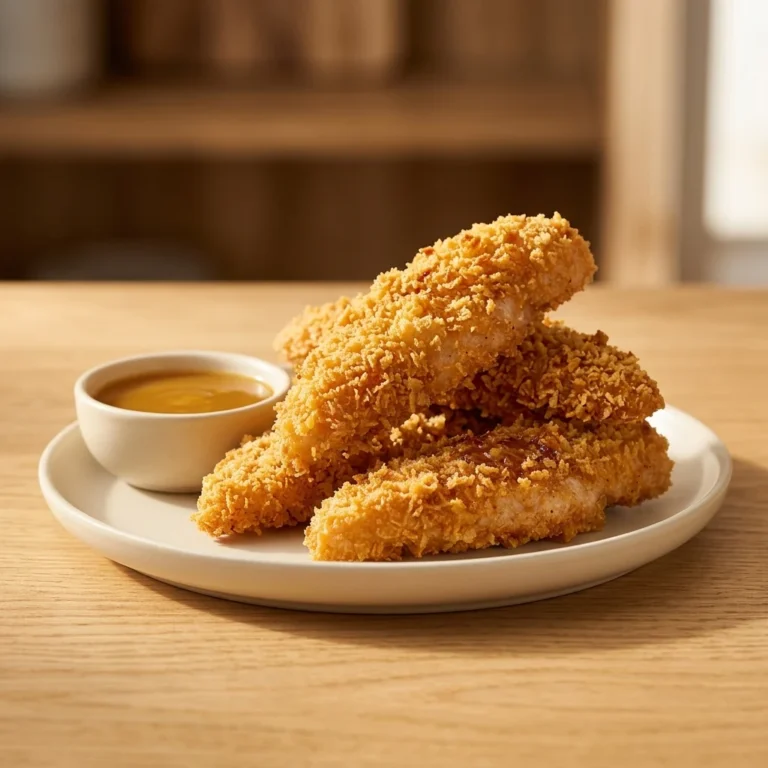

Best One Pan Chicken Breast With Vegetables — 30 Minutes
One pan chicken and vegetables should be simple. Everything goes in together, comes out together, one pan to clean.
The problem is that vegetables and chicken breast do not cook at the same rate. Chicken breast dries out at the exact moment most dense vegetables are finally becoming tender. The result is either perfectly cooked chicken with crunchy vegetables, or soft vegetables with dry, overcooked chicken.
The fix is a staggered start dense vegetables go in first, chicken and quick-cooking vegetables join partway through. Everything finishes at the same time, nothing is overcooked, and the pan drippings from the chicken turn into a two-minute sauce that makes the whole dish taste significantly better than a basic sheet pan recipe.
That is the full method.
Why You’ll Love This Recipe
- Truly one pan chicken and vegetables roast together with no extra pots
- Ready in 30 minutes staggered start means everything finishes simultaneously
- Endlessly flexible works with almost any vegetable combination
- Built-in sauce pan drippings become a simple, deeply flavored finish
- Minimal cleanup one sheet pan, done
About This Recipe
This one pan chicken breast with vegetables was tested at 400°F, 425°F, and 450°F, with staggered and simultaneous vegetable start times, with and without the pan sauce step, and with six different vegetable combinations. The method below produced the most consistent results juicy chicken, properly roasted vegetables, and a cohesive dish rather than a collection of separately cooked items sharing a pan.
The Vegetable Timing Problem Solved
This is what separates a genuinely good one pan chicken dinner from a mediocre one.
Different vegetables have completely different cook times at 425°F:
| Vegetable | Cook Time at 425°F | Start Time |
|---|---|---|
| Potatoes (1-inch cubes) | 30–35 min | Start of cook |
| Carrots (½-inch rounds) | 25–30 min | Start of cook |
| Broccoli florets | 15–18 min | With chicken |
| Zucchini (½-inch rounds) | 12–15 min | With chicken |
| Bell peppers (1-inch pieces) | 15–18 min | With chicken |
| Cherry tomatoes | 10–12 min | Last 10 minutes |
| Asparagus | 10–12 min | Last 10 minutes |
| Baby spinach | 5 min | Last 5 minutes |
Chicken breast at 425°F takes 20 to 25 minutes. Dense vegetables that need 30 minutes go in first. Quick-cooking vegetables go in with the chicken. Delicate vegetables go in at the end. Everything finishes together.
This timing guide is what most one pan recipes skip entirely.
Ingredients
For the Chicken:
- Boneless skinless chicken breasts — 4 medium (6 to 7 oz each)
- Olive oil — 1 tbsp
- Smoked paprika — 1 tsp
- Garlic powder — 1 tsp
- Dried oregano — ½ tsp
- Salt — 1 tsp
- Black pepper — ½ tsp
For the Vegetables (Dense Start First):
- Baby potatoes — 1 lb, halved (or regular potatoes cut into 1-inch cubes)
- Carrots — 2 medium, cut into ½-inch rounds
For the Vegetables (Quick-Cooking Add With Chicken):
- Broccoli florets — 2 cups
- Bell pepper — 1 large, cut into 1-inch pieces (any color)
- Red onion — ½ medium, cut into wedges
For Seasoning Vegetables:
- Olive oil — 2 tbsp
- Garlic powder — ½ tsp
- Italian seasoning — 1 tsp
- Salt — ½ tsp
- Black pepper — ¼ tsp
Optional Pan Sauce:
- Butter — 1 tbsp
- Garlic — 1 clove, minced
- Chicken broth — 3 tbsp
- Fresh lemon juice — 1 tsp
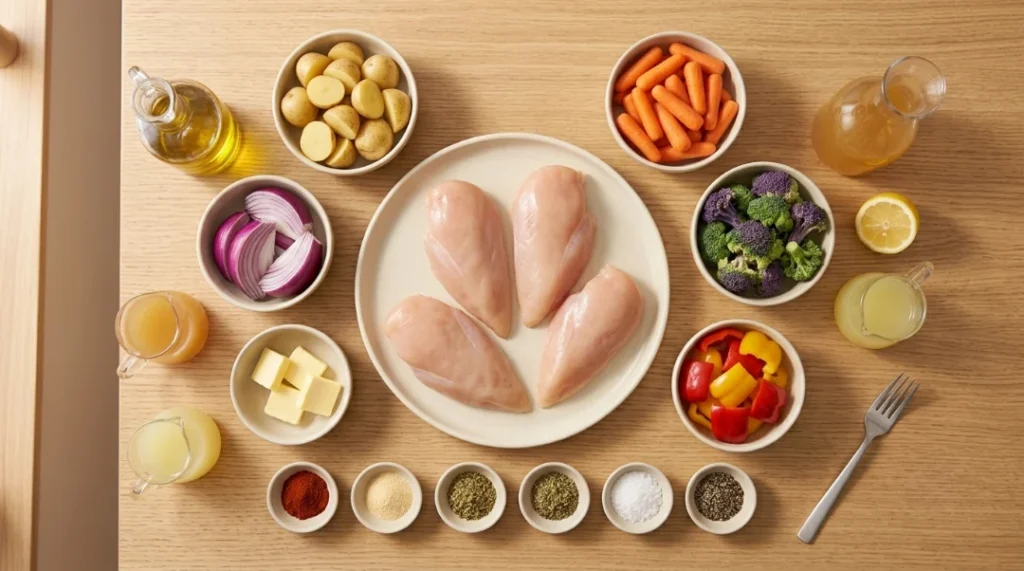
Ingredient Notes and Substitutions
Dense vegetable substitutes: Sweet potato (same timing as regular potato), parsnips (same as carrots), beets (needs 35 to 40 minutes start 10 minutes before potatoes).
Quick-cooking vegetable substitutes: Zucchini, yellow squash, mushrooms, green beans. Any of these swap directly for broccoli or bell pepper with no timing changes.
Add at the end: Cherry tomatoes, asparagus, snap peas all need only 10 to 12 minutes and go in during the last portion of the cook.
No baby potatoes? Regular russet or Yukon Gold potatoes cut into 1-inch cubes work exactly the same way.
The Cut Size Rule
This is the detail most one pan recipes mention once and move on from. Cut size determines cook time more than any other variable.
The rule: All pieces of the same vegetable should be cut to the same size. Inconsistent sizing means some pieces are done before others which produces a mix of overcooked and undercooked in the same pan.
Specific targets:
- Potatoes: 1-inch cubes or halved baby potatoes
- Carrots: ½-inch rounds (no thicker carrots are dense and need even heat penetration)
- Broccoli: medium florets, roughly golf ball size
- Bell pepper: 1-inch pieces
- Onion: wedges that stay intact rather than falling apart
Cut everything before seasoning consistent sizing is the foundation of consistent cooking.
Step-by-Step Instructions
Step 1: Preheat and Prep
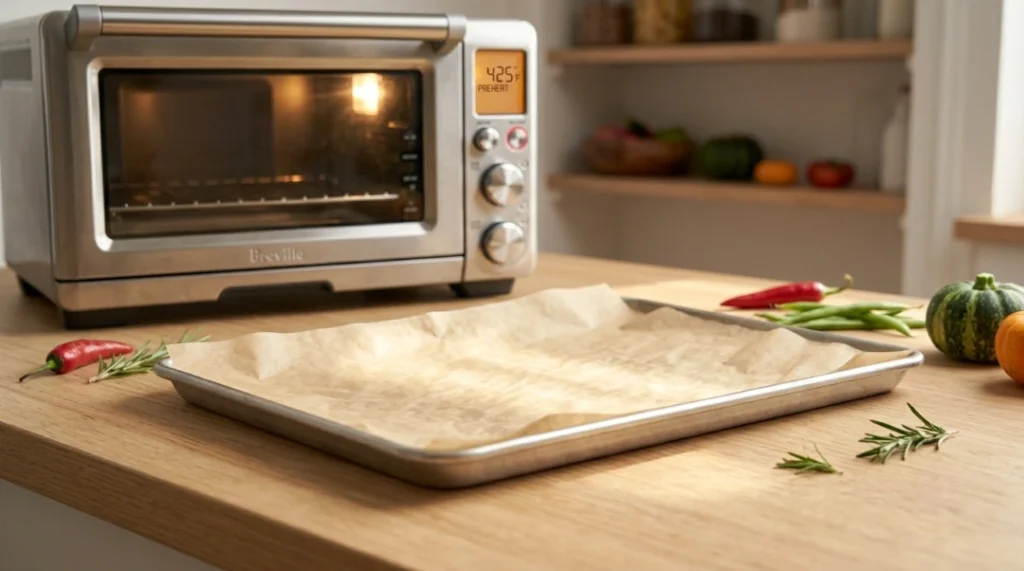
Preheat oven to 425°F (220°C). Line a large rimmed baking sheet with parchment paper or foil for easier cleanup.
The pan size matters. A standard half-sheet pan (18×13 inches) fits 4 chicken breasts and the full vegetable quantity without crowding. A smaller pan means the vegetables steam rather than roast crowded vegetables release moisture that cannot evaporate fast enough at oven temperature.
Step 2: Season and Start the Dense Vegetables
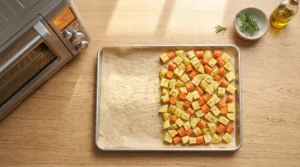
Toss potatoes and carrots with 1 tbsp of the olive oil, garlic powder, Italian seasoning, salt, and pepper. Spread in a single layer on one half of the prepared pan.
Roast for 10 minutes at 425°F before anything else goes in. This 10-minute head start gives dense vegetables the extra time they need without requiring the chicken to cook longer than it should.
Step 3: Prepare the Chicken
While dense vegetables start roasting, prepare the chicken. Pat each breast dry with paper towels. Brush with 1 tbsp olive oil. Combine smoked paprika, garlic powder, oregano, salt, and pepper. Rub evenly over all surfaces.
Step 4: Add Chicken and Quick-Cooking Vegetables
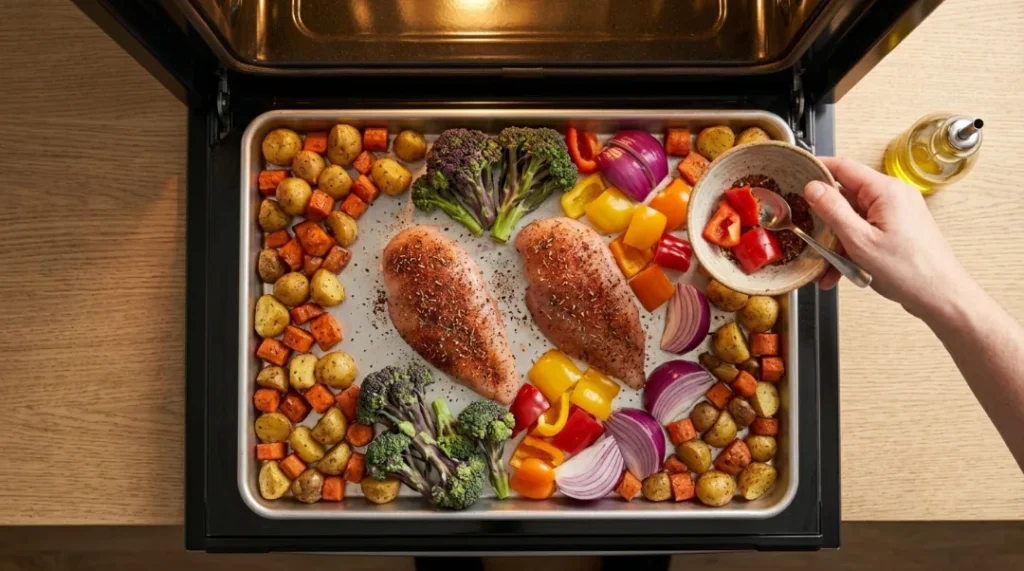
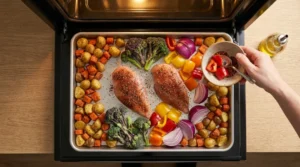
After 10 minutes, remove the pan from the oven. Push the partially-roasted dense vegetables to the edges. Add the chicken breasts to the center of the pan they go in the center because this is the area with the most consistent heat and the best air circulation.
Toss broccoli, bell pepper, and onion with remaining 1 tbsp olive oil and a pinch of salt. Add them around the chicken, filling the gaps between the dense vegetables.
Return the pan to the oven.
Step 5: Roast Until Done
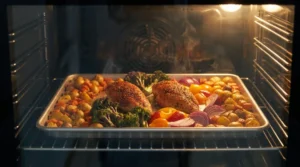
Roast for 20 to 25 minutes until chicken internal temperature reads 165°F at the thickest part per USDA safe minimum cooking temperatures and vegetables are tender and caramelized at the edges.
Check chicken temperature at 20 minutes. Remove any vegetables that finish before the chicken and set aside covered this rarely happens with the timing guide above but very thin vegetables can finish early.
Total time in oven: 30 to 35 minutes (10 minutes dense vegetables alone, 20 to 25 minutes everything together).
Step 6: Rest the Chicken
Transfer chicken to a plate and rest for 5 minutes. Leave vegetables on the pan.
While chicken rests, make the optional pan sauce the step that turns a good dish into an excellent one.
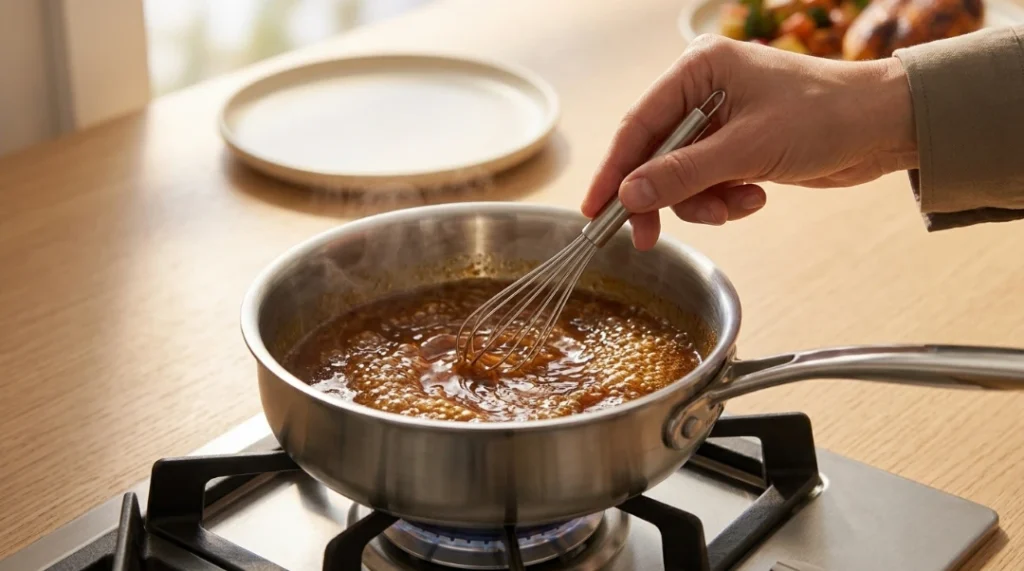
Step 7: Two-Minute Pan Sauce
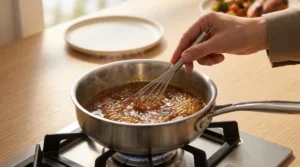
Tilt the pan slightly the drippings from the chicken will have pooled. Pour the drippings into a small saucepan over medium heat.
Add butter and let it melt into the drippings. Add minced garlic and stir for 30 seconds. Add chicken broth and lemon juice. Simmer for 90 seconds until slightly reduced and glossy.
Spoon over rested chicken and vegetables before serving.
The drippings from a well-seasoned chicken breast cooked at high heat contain concentrated flavor the pan sauce captures that entirely and distributes it across the whole dish. This step takes two minutes and changes the dish from good to something that feels complete.
What Went Wrong in Early Testing
Batch 1: Everything added simultaneously at the start. Potatoes and carrots were still firm when the chicken reached 165°F. Broccoli was charred at the edges. The chicken was fine. The vegetables were at two different stages of done at the same time. Staggered start on the next batch fixed everything.
Batch 2: Pan too small standard 9×13 inch pan. The vegetables released moisture that could not evaporate fast enough. Everything steamed instead of roasting pale, soft vegetables instead of caramelized. Switched to a full half-sheet pan and the vegetables caramelized properly.
Batch 3: Skipped the pan sauce. The dish was fine. Complete, balanced, one pan. But the drippings went down the drain. Made the pan sauce on the next batch the difference in how the whole dish tasted was significant enough to add it as a recommended step.
Vegetable Combinations That Work Best
Classic combination: Potatoes + carrots + broccoli + bell pepper + red onion
Mediterranean: Cherry tomatoes + zucchini + red onion + kalamata olives (add last 5 minutes) + fresh basil after serving
Fall/Winter: Sweet potato + parsnips + brussels sprouts + red onion
Low carb: Broccoli + cauliflower + asparagus + bell pepper + mushrooms (skip potatoes entirely)
Summer: Zucchini + yellow squash + cherry tomatoes + asparagus + red onion (all quick-cooking skip the 10-minute head start)
Seasoning the Vegetables Separately Why It Matters
Most one pan recipes toss everything together in one bowl. Testing showed a noticeable difference between separately seasoned vegetables and everything tossed together.
When everything is tossed together, the seasoning distributes unevenly some pieces get more, some get less, and the chicken seasoning and vegetable seasoning blend into something generic.
Seasoning the chicken separately with its own dry rub and the vegetables separately with Italian seasoning creates two distinct flavor profiles that complement each other rather than blending into a single, less interesting taste.
Two bowls, 3 extra minutes, noticeably better result.
Temperature Guide Why 425°F
| Temperature | Result |
|---|---|
| 375°F | Vegetables steam more than roast, pale color, softer texture |
| 400°F | Good result vegetables roast, chicken stays moist |
| 425°F | Best result vegetables caramelize at edges, chicken stays juicy |
| 450°F | Vegetables char quickly on outside before cooking through, chicken browns unevenly |
425°F produces the best balance vegetables caramelize without burning and chicken stays tender. 425°F is the sweet spot.
Pro Tips
- Stagger the vegetables this is the whole method. Dense vegetables 10 minutes first, everything else with the chicken. Without the stagger, something is always wrong.
- Half-sheet pan is the minimum size. A smaller pan crowds everything and produces steamed rather than roasted vegetables.
- Season vegetables separately from the chicken. Two different seasoning profiles produce a more interesting, layered result.
- Cut everything to consistent sizes. Inconsistent sizing is the most common cause of uneven cooking.
- The pan sauce is worth 2 minutes. The drippings are the most flavorful thing in the pan do not discard them.
Variations
Lemon Herb: Add 1 tsp lemon zest to the chicken dry rub. Use thyme and rosemary instead of oregano. Finish with lemon juice pan sauce.
Italian Style: Add ½ tsp basil and ½ tsp fennel seed to the vegetable seasoning. Use cherry tomatoes and zucchini as quick-cooking vegetables. Finish with a drizzle of good olive oil.
Cajun Style: Replace chicken dry rub with 1.5 tsp Cajun seasoning. Add corn on the cob (cut into rounds) with the dense vegetables. Bold and crowd-pleasing.
Honey Garlic: Brush chicken with 1 tbsp honey mixed into the olive oil before seasoning. Add the same honey to the pan sauce. Slightly sweet, deeply savory.
Low Carb: Skip potatoes and carrots entirely. Use broccoli, cauliflower, bell pepper, zucchini, and mushrooms. Reduce initial roast to 0 minutes everything goes in together and cooks for 20 to 25 minutes.
What to Serve With
- Best One Pan Chicken and Rice Dinner — if you want rice instead of vegetables as the side
- Best Baked Chicken Breast That Never Dries Out — simpler breast method without vegetables
- Best Stuffed Chicken Breast — Easy Weeknight Winner — impressive option for the same occasion
- Crusty bread for getting every drop of the pan sauce
- Simple green salad the lightness balances the richness of the roasted vegetables
- Steamed couscous absorbs the pan sauce perfectly
Storage and Reheating
Fridge: Up to 4 days in an airtight container. Store chicken and vegetables together the chicken absorbs flavor from the vegetables during storage.
Reheat (oven): 375°F for 10 to 12 minutes uncovered. Vegetables crisp back up slightly, chicken reheats evenly.
Reheat (air fryer): 370°F for 5 to 6 minutes. Best for getting some crispness back on the vegetables specifically.
Reheat (microwave): Cover with damp paper towel. Medium power for 90 seconds. Convenient but vegetables soften acceptable for a quick lunch.
Freeze: Chicken freezes well. Roasted vegetables do not freeze as well they turn soft and watery when thawed. Freeze chicken separately and make fresh vegetables when reheating.
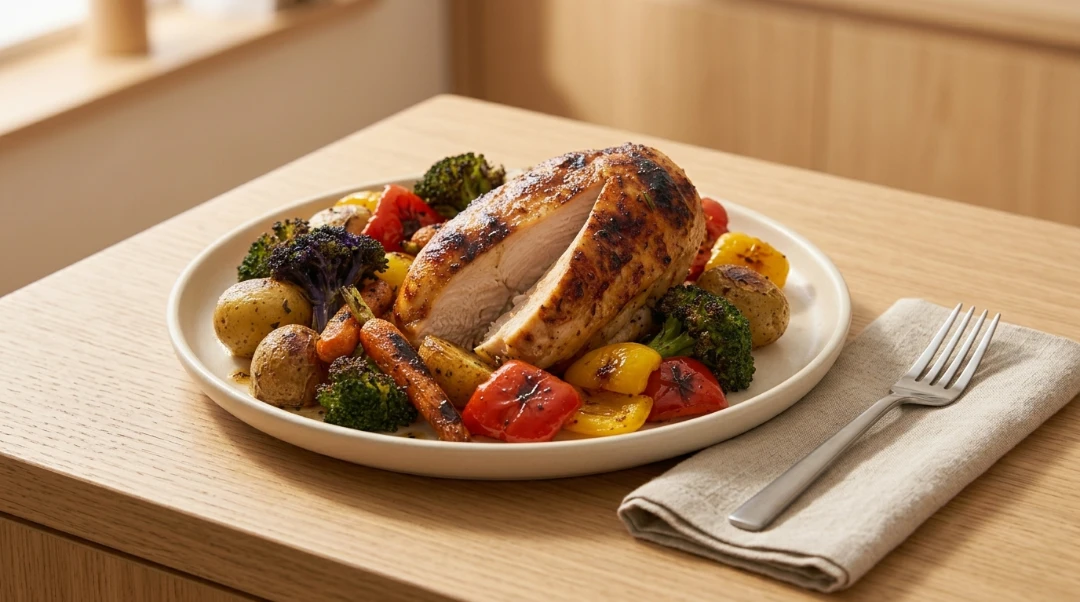
Best One Pan Chicken Breast and Vegetables — Easy 30 Minute Dinner
Ingredients
Equipment
Method
- Preheat and Prep Pan Preheat oven to 425°F. Line half-sheet pan with parchment paper or foil. Pan size is critical a smaller pan crowds vegetables and causes steaming instead of roasting.
- Start Dense Vegetables Toss potatoes and carrots with 1 tbsp olive oil, garlic powder, Italian seasoning, salt, and pepper. Spread in single layer on one half of pan. Roast 10 minutes.
- Season Chicken Pat chicken dry with paper towels. Brush with 1 tbsp olive oil. Combine smoked paprika, garlic powder, oregano, salt, and pepper. Rub evenly over all surfaces.
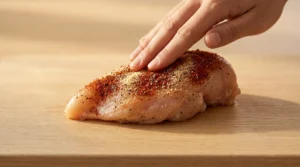
- Add Chicken and Quick Vegetables After 10 minutes remove pan. Push dense vegetables to edges. Place chicken breasts in center. Toss broccoli, bell pepper, and onion with remaining 1 tbsp olive oil and pinch of salt. Add around chicken filling gaps. Return to oven.
- Roast to Finish Roast 20 to 25 minutes until chicken reaches 165°F at thickest part per USDA safe minimum cooking temperatures and vegetables are tender with caramelized edges. Check chicken temperature at 20 minutes.
- Rest Chicken Transfer chicken to plate. Rest 5 minutes. Leave vegetables on pan.
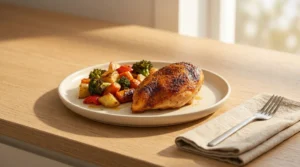
- Pan Sauce (2 Minutes) Pour pan drippings into small saucepan over medium heat. Add butter, garlic (30 seconds), broth, and lemon juice. Simmer 90 seconds until slightly reduced. Spoon over chicken and vegetables.
Notes
Nutrition Info (per serving, 1 chicken breast with vegetables)
| Nutrient | Amount |
|---|---|
| Calories | 412 |
| Protein | 38g |
| Fat | 12g |
| Carbohydrates | 34g |
| Sodium | 520mg |
| Fiber | 6g |
| Sugar | 6g |
Nutrition information is an estimate and may vary depending on the ingredients and brands used. Data sourced from USDA FoodData Central.
FAQs
Q: How do I stop vegetables from getting soggy in one pan chicken?
A: Two causes pan is too small (crowded vegetables steam instead of roast) and all vegetables added at the same time (dense vegetables release moisture for longer). Use a full half-sheet pan and stagger the vegetables: dense ones (potatoes, carrots) first for 10 minutes, quick-cooking ones (broccoli, bell pepper) in with the chicken.
Q: How long does one pan chicken breast with vegetables take?
A: 30 to 35 minutes total in the oven 10 minutes for dense vegetables alone, then 20 to 25 minutes with chicken and quick-cooking vegetables added. Total prep time is about 15 minutes, making this a genuinely 45-minute dinner start to finish.
Q: What temperature is best for sheet pan chicken and vegetables
? A: 425°F produces the best balance vegetables caramelize at the edges without burning and chicken stays juicy. 400°F works well but produces slightly less caramelization. 450°F chars vegetables quickly before they cook through.
Q: Can I use frozen vegetables in one pan chicken?
A: Not recommended for roasting frozen vegetables release significant moisture as they thaw in the oven, which creates steam that prevents caramelization. The result is soft, pale vegetables instead of golden roasted ones. Fresh vegetables produce dramatically better results for this method.
Q: What vegetables go best with chicken in one pan?
A: Any vegetable works if the timing is managed correctly. The best all-around combination is potatoes + carrots (dense, start first) + broccoli + bell pepper + red onion (quick-cooking, add with chicken). Cherry tomatoes and asparagus can be added in the last 10 minutes. Avoid very watery vegetables like cucumber or lettuce entirely.
Q: How do I know when the chicken is done?
A: Internal temperature of 165°F at the thickest part is the only reliable method the USDA minimum for safe chicken per USDA safe minimum cooking temperatures. Time is a starting point. Temperature is the finish line.
About the Author
Written by a home cook and recipe developer who has tested one pan chicken and vegetable methods across multiple temperatures, vegetable combinations, and timing approaches. Every recommendation reflects real kitchen testing.
Would I Make This Again?
Every week it has become the most flexible recipe in this kitchen.
The staggered start took one failed batch to understand and one successful batch to commit to permanently. The pan sauce took zero convincing the drippings are there, the saucepan takes 30 seconds to dirty, and the result is worth it every time.
One pan chicken breast with vegetables done right is not a compromise dinner. It is a complete, genuinely good meal that happens to require one pan and 45 minutes from start to finish.
Final Note
Juicy chicken, caramelized vegetables, and a two-minute pan sauce from one sheet pan in 30 minutes the staggered vegetable start, the right pan size, and the separate seasoning are what make this work consistently.
Dense vegetables first, chicken and quick-cookers together, pan sauce at the end. That is the whole method.
Made this? Save this recipe for your next busy weeknight and drop a comment below. Which vegetable combination did you use and did you make the pan sauce? Pin this before you forget it.