

Best Apple Cider Glazed Chicken Thighs — Fall Dinner
There is a specific smell that belongs to fall kitchens apples, caramelized onions, and something savory reducing on the stove.
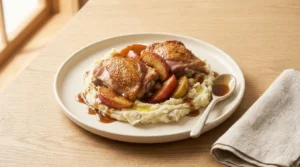
This apple cider glazed chicken thighs recipe produces exactly that smell, and then produces a dinner that tastes even better than it smells. The glaze starts as simple apple cider and reduces into something sticky, tangy, and deeply fall-flavored with a golden sear underneath that keeps the skin from going soft in the oven.
For well over a decade, this kind of chicken thigh recipe with apple cider and honey has been a fall favorite they get deeply golden and have a ridiculous amount of flavor for being made with very simple ingredients.
The key is the sear-then-oven method and the Dijon mustard in the glaze the detail that most apple cider chicken recipes either skip or mention without explaining. Here is the full method.
Why You’ll Love This Recipe
- Sticky, glossy, deeply fall-flavored glaze apple cider reduced to perfection
- Sear plus oven method crispy golden skin, juicy meat, one pan
- Ready in 45 minutes weeknight friendly despite looking impressive
- Naturally seasonal uses fall’s best ingredient at its peak
- Complete fall dinner add apple slices and shallots to the same pan
The Apple Cider Question Which Type to Use
This is a detail worth understanding before starting.
| Type | Flavor | Best For | Avoid Because |
|---|---|---|---|
| Fresh pressed apple cider | Bright, complex, tart-sweet | Best choice | |
| Store-bought apple cider (unfiltered) | Good, slightly less complex | Great everyday choice | |
| Filtered apple juice | Flat, one-dimensional | Acceptable substitute | Too sweet, no depth |
| Hard cider (dry) | Complex, slightly bitter | Adult version of the dish | Alcohol cooks off but flavor differs |
| Hard cider (sweet) | Too sweet | Not recommended | Throws off the glaze balance |
Use a dry cider rather than a sweeter one for this kind of dish, as a sweeter cider could skew the balance of flavors in the glaze.
Fresh pressed apple cider from a farm stand or farmers market produces the most complex glaze it has tannins, natural sugars, and tartness that filtered apple juice cannot replicate. For a weeknight dinner, unfiltered store-bought apple cider is excellent.
The Apple Variety Guide Why It Matters
The best apples for this dish have crisp texture and sweet flavor Fuji and Honeycrisp are a little less sweet, Gala is tops for sweetness, and Granny Smith adds tartness.
Testing different apple varieties in the pan alongside the chicken produced clear results:
| Apple | Texture When Cooked | Flavor | Best For |
|---|---|---|---|
| Honeycrisp | Holds shape, slight bite | Sweet, complex | Best overall |
| Granny Smith | Firm, holds perfectly | Tart, bright | Cuts through rich glaze |
| Fuji | Softens significantly | Mild, sweet | Gets lost in the dish |
| Gala | Softens quickly | Very sweet | Can make dish too sweet |
| Pink Lady | Holds well | Balanced sweet-tart | Excellent choice |
Honeycrisp and Granny Smith are the top two choices. Granny Smith adds a tartness that balances the sweetness of the cider glaze particularly well.
The Dijon Mustard Secret
Almost every apple cider chicken recipe includes garlic, thyme, and cider. The ones that taste genuinely restaurant-quality also include Dijon mustard and most recipes either skip it or add it without explaining why.
Dijon mustard does three things in this glaze:
1. Emulsification it helps the glaze hold together as a smooth, glossy coating rather than separating into an oily mess.
2. Flavor balance the sharpness of Dijon cuts through the sweetness of the apple cider and honey, preventing the glaze from tasting one-dimensional.
3. Subtle complexity it adds a background warmth that makes people say the dish tastes “better than expected” without being able to identify the specific ingredient.
One tablespoon of Dijon in the glaze. That is the detail that changes the recipe.
About This Recipe
These apple cider glazed chicken thighs were tested with fresh cider vs store-bought, hard cider vs regular, Honeycrisp vs Granny Smith vs Fuji apples, stovetop-only vs sear-plus-oven methods, and with and without Dijon mustard. The method below produced the most consistently golden, sticky, deeply flavored result across every test.
Ingredients
For the Chicken:
- Bone-in skin-on chicken thighs 4 to 6 pieces (about 2 lbs)
- Salt — 1 tsp
- Black pepper — ½ tsp
- Garlic powder — ½ tsp
- Smoked paprika — ½ tsp
- Olive oil — 1 tbsp
For the Apple Cider Glaze:
- Apple cider — 1 cup (unfiltered, not filtered juice)
- Dijon mustard — 1 tbsp (the secret ingredient)
- Honey — 2 tbsp (sticky texture and caramelization)
- Apple cider vinegar — 1 tbsp (brightens and balances)
- Fresh thyme — 3 sprigs (or 1 tsp dried)
- Garlic — 3 cloves, minced
- Butter — 1 tbsp (added at end for richness)
- Salt — ¼ tsp
For the Pan:
- Shallots — 2 large, halved lengthwise (or 1 small onion, quartered)
- Honeycrisp or Granny Smith apples — 2 medium, cored and cut into wedges
- Fresh rosemary — 1 sprig (optional pairs beautifully with apple)
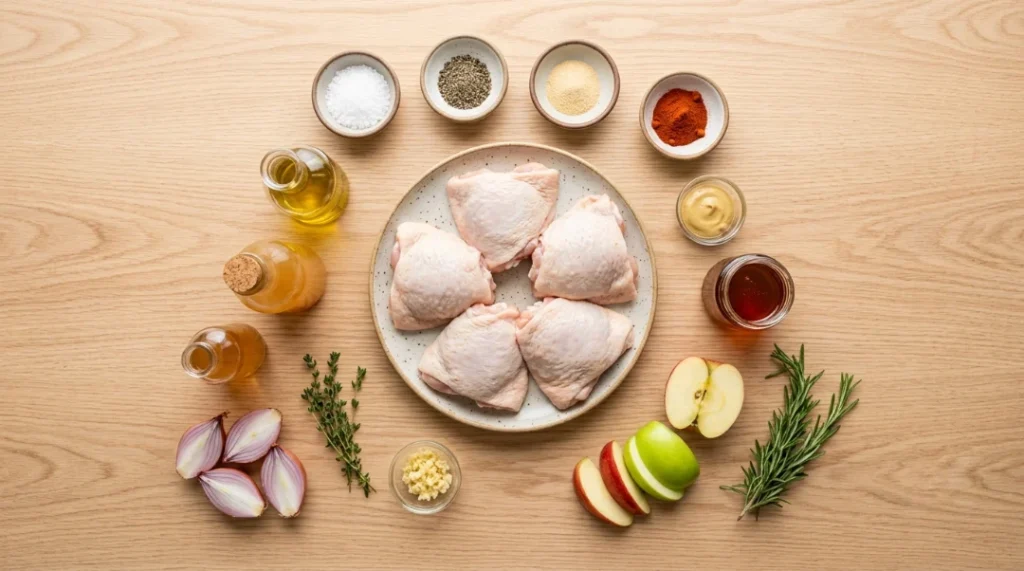
Ingredient Notes and Substitutions
Apple cider: Unfiltered is strongly recommended. The natural sediment in unfiltered cider contains pectin that helps the glaze thicken naturally during reduction. Filtered apple juice produces a thinner, flatter glaze.
Dijon mustard: Whole-grain mustard works as a substitute it adds visible texture to the glaze and a slightly nuttier flavor. Yellow mustard does not work the flavor is too sharp and one-dimensional.
Shallots: Shallots caramelize more evenly than onion and have a milder, slightly sweeter flavor that complements the apple cider glaze. Regular yellow onion quartered works well as a substitute.
Bone-in vs boneless: Bone-in skin-on thighs are recommended the skin crisps beautifully and the bone adds flavor to the pan sauce. Boneless skinless thighs work but reduce oven time to 15 minutes and the dish loses some of the richness from the rendered skin fat.
Step-by-Step Instructions
Step 1: Preheat and Season
Preheat oven to 425°F (220°C).
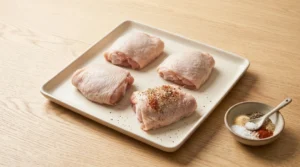
Pat chicken thighs completely dry with paper towels. Combine salt, pepper, garlic powder, and smoked paprika. Season all surfaces generously including under the skin where possible.
Step 2: Make the Apple Cider Glaze
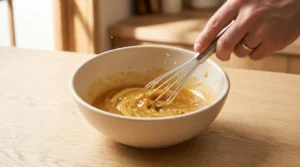
Whisk together apple cider, Dijon mustard, honey, apple cider vinegar, and salt in a small bowl or measuring cup. Set aside. Garlic goes directly into the pan in Step 4 adding it to the glaze mixture now would burn it during the sear.
The glaze is not cooked separately before going into the pan it reduces around the chicken during the oven time, picking up the chicken drippings and fond from the sear. This produces a more complex glaze than one reduced separately.
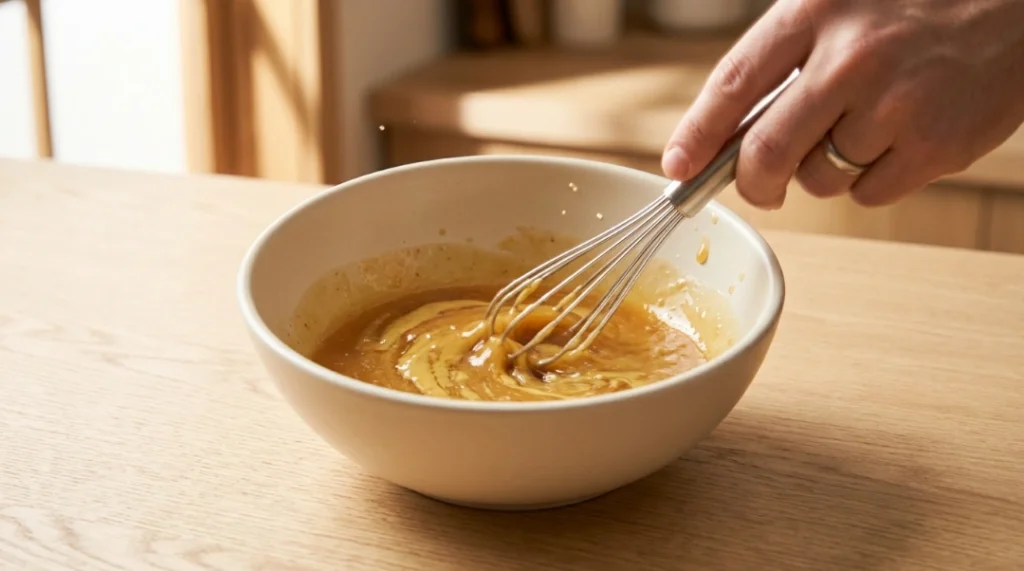
Step 3: Sear the Chicken
Heat olive oil in an oven-safe skillet or cast iron pan over medium-high heat until shimmering.
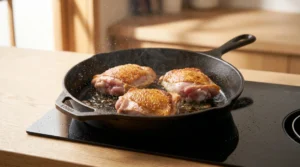
Place chicken thighs skin side down. Sear without moving for 5 to 6 minutes until skin is deep golden and releases naturally from the pan the Maillard reaction creates that browned, savory crust that carries flavor through the entire dish. Flip and sear the second side for 2 minutes.
Remove chicken from the pan and set aside. Leave the rendered chicken fat in the pan it becomes part of the glaze base.
The sear is what separates this recipe from versions that go straight into the oven. Cooking skin-side down undisturbed until the skin is browned and crisp about 5 minutes creates the foundation of flavor for the entire dish.
Step 4: Build the Pan
Reduce heat to medium. Add shallots cut-side down to the pan. Cook 2 minutes until beginning to caramelize in the chicken fat.
Add minced garlic and stir 30 seconds. Add fresh thyme and rosemary sprig.
Pour the apple cider glaze mixture into the pan. Stir to scrape up any fond from the sear. Bring to a simmer the glaze should bubble actively.
Step 5: Add Chicken and Apple Wedges
Nestle chicken thighs skin-side up into the glaze. The skin should sit above the liquid line not submerged. Submerged skin softens during the oven time.
Add apple wedges around the chicken, nestling them between the thighs.
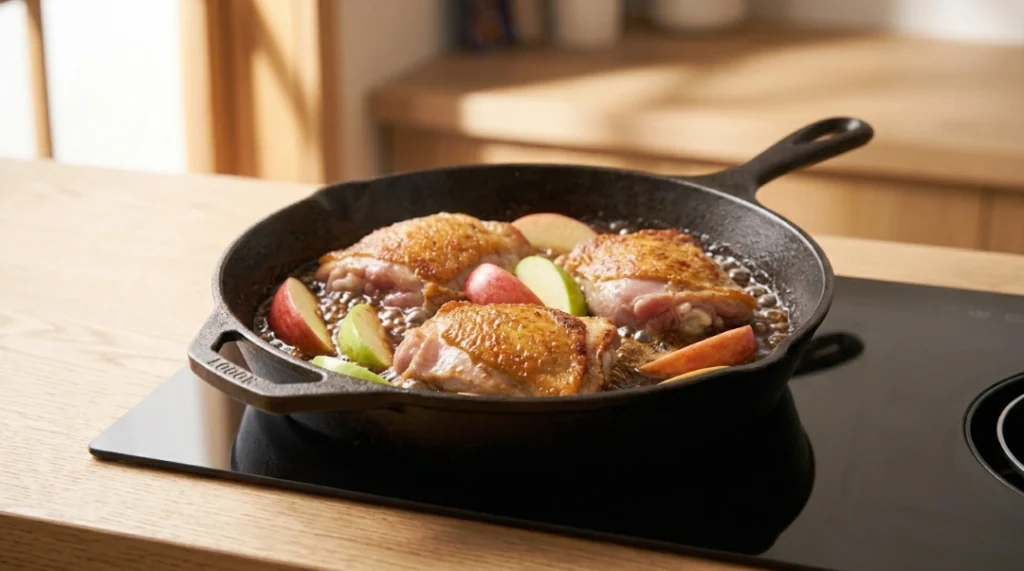
Step 6: Oven Finish
Transfer the skillet to the preheated oven. Roast at 425°F for 20 to 25 minutes until:
- Chicken internal temperature reads 165°F at the thickest part away from the bone per USDA safe minimum cooking temperatures
- Skin is deep golden and looks crispy
- Glaze has reduced and looks sticky around the edges of the pan
- Apple wedges are tender but still holding their shape
Check at 20 minutes smaller thighs finish first.
Step 7: Finish the Glaze
Remove from oven. Transfer chicken and apples to a serving plate. Return the pan to the stovetop over medium-high heat.
Add butter and stir into the pan glaze. Simmer for 1 to 2 minutes until the glaze reduces to a sticky, glossy consistency that coats the back of a spoon.
If the glaze is still too thin after 2 minutes: mix 1 tsp cornstarch with 1 tbsp. cold water into a slurry. Add to the simmering glaze and stir it thickens within 30 seconds. This is the fix most recipe comment sections explain that the actual recipe never mentions.
Spoon glaze over chicken and apples before serving.
Step 8: Rest and Serve
Rest 5 minutes. Serve directly from the pan or on a platter with pan glaze spooned generously over everything.
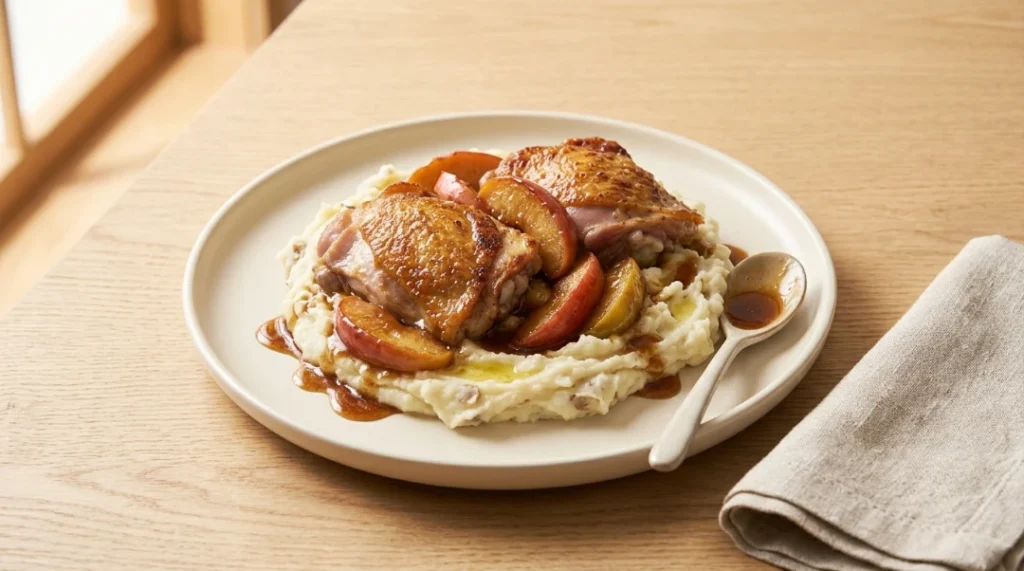
What Went Wrong in Early Testing
Batch 1: Stovetop only no oven finish. The sauce wasn’t cooked down enough at the end, so I removed the chicken and put the pan on the burner to boil down to my liking. Then added the chicken back. The stovetop-only method produced a good result but the skin lost crispiness during the stovetop simmer time. Sear then oven produces consistently better skin texture.
Batch 2: Added apple wedges at the start. By the time the chicken was done, the apple wedges had completely broken down into the glaze more of an apple sauce situation than distinct pieces of apple alongside the chicken. Adding them with the chicken at Step 5 keeps them intact.
Batch 3: Used filtered apple juice instead of cider. The glaze reduced to the right consistency but the flavor was noticeably flat sweet without any of the complexity that makes apple cider glaze taste like fall. Switched to unfiltered cider permanently.
Glaze Troubleshooting Guide
| Problem | Cause | Fix |
|---|---|---|
| Glaze too thin | Not enough reduction | Simmer 2 more minutes stovetop |
| Still too thin | Apple juice used instead of cider | Add 1 tsp cornstarch slurry |
| Glaze too sweet | Sweet apple juice or too much honey | Add ½ tbsp more apple cider vinegar |
| Glaze burns | Oven too hot or too long | 425°F max, check at 20 minutes |
| Skin not crispy | Skin was submerged in glaze | Keep skin above liquid line |
Slow Cooker Version Complete Method
Place apples and onions in the base of a slow cooker. Sprinkle with salt. Place seasoned chicken on top. Pour over apple cider. Cover and cook on high for 4 hours or low for 6 until chicken is very tender and cooked through.
Full slow cooker method:
Season chicken as written. Skip the sear (or sear for 3 minutes per side for extra flavor optional but recommended). Place shallots and apple wedges in slow cooker base. Lay chicken skin-side up on top. Whisk together cider, Dijon, honey, vinegar, garlic, and thyme pour over chicken.
Cook low 5 to 6 hours or high 3 to 4 hours. Always verify internal temperature reaches 165°F at the thickest part before removing slow cooker temperatures vary significantly between models and thigh sizes differ. Transfer chicken to a baking sheet. Broil skin-side up for 3 to 4 minutes for crispy skin finish.
Pour slow cooker liquid into a saucepan over medium-high heat. Reduce by half about 8 to 10 minutes or add cornstarch slurry to thicken quickly. Pour reduced glaze over chicken and serve.
Pro Tips
- Dijon mustard is the secret. One tablespoon in the glaze adds emulsification, flavor balance, and the background warmth that makes this dish taste genuinely restaurant-quality.
- Keep chicken skin above the liquid. Submerged skin softens in the oven. The skin should sit on top of the glaze, not in it.
- Honeycrisp or Granny Smith only. Fuji and Gala break down too quickly and become lost in the glaze. Firm, tart apples hold their shape and add contrast.
- Add apples with the chicken, not before. Early-added apples turn to mush before the chicken finishes cooking.
- Cornstarch slurry fixes thin glaze instantly. 1 tsp cornstarch + 1 tbsp cold water stirred into simmering glaze thickens in 30 seconds no extra cooking time needed.
Variations
Maple Apple Cider: Replace honey with maple syrup. Add ¼ tsp cinnamon to the glaze. Deeper, more complex fall flavor.
Spicy Apple Cider: Add 1 tsp sriracha or ¼ tsp cayenne to the glaze. The heat against the sweet apple cider is genuinely excellent.
Cranberry Apple Cider: Add ¼ cup fresh or frozen cranberries to the pan in Step 5. They burst during cooking and add color and tartness to the glaze.
Slow Cooker Version: Full method in the Slow Cooker section above.
Boneless Version: Use boneless skinless thighs. Reduce oven time to 15 minutes. Skip the apple wedges or add them at the 10-minute mark only.
What to Serve With Fall Dinner Complete
- Garlic mashed potatoes the pan glaze spoons over mashed potatoes perfectly
- Roasted brussels sprouts the bitterness balances the sweet glaze
- Wild rice earthy and nutty, absorbs the pan sauce beautifully
- Crusty sourdough bread for getting every drop of the glaze
- Best One Pan Chicken and Rice Dinner — if you want rice incorporated into the dish
- Best Honey Garlic Chicken Thighs Stovetop — another glazed chicken thigh option for comparison
- Best Easy Homemade Chicken Pot Pie — another fall comfort food from this site
Storage and Reheating
Fridge: Up to 4 days in an airtight container with glaze stored separately or poured over chicken.
Reheat (oven): 325°F covered with foil for 12 to 15 minutes. Low temperature prevents the glaze from burning during reheating.
Reheat (stovetop): Medium-low heat in a covered pan with 2 tbsp apple cider or water added. The liquid rehydrates the glaze.
Reheat (microwave): Cover with damp paper towel. 50% power for 90 seconds, then full power for 45 seconds. Glaze may need a fresh spoonful from stored leftovers.
Freeze: Chicken freezes well for up to 2 months. Freeze without the apple wedges they become mushy when frozen. Thaw overnight in fridge, reheat in oven at 325°F covered.
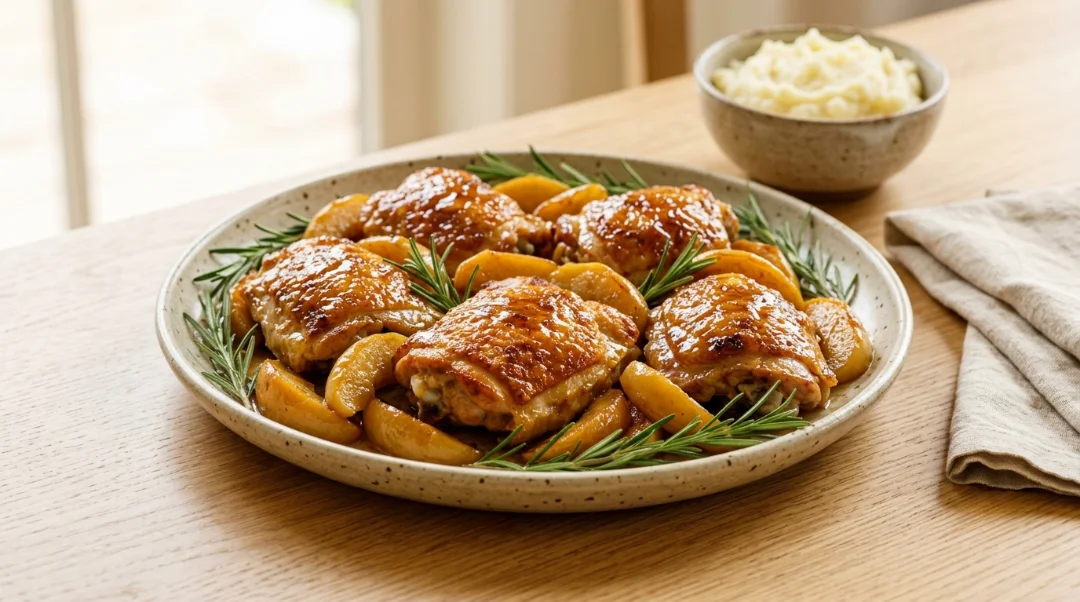
Best Apple Cider Glazed Chicken Thighs
Ingredients
Equipment
Method
- Season Chicken Pat thighs dry with paper towels. Combine salt, pepper, garlic powder, smoked paprika. Season all surfaces generously including under skin.
- Make Glaze Whisk apple cider, Dijon mustard, honey, apple cider vinegar, and salt together in a small bowl. Set aside. Garlic is added directly in Step 4 not in the glaze mix.
- Sear Heat olive oil in oven-safe skillet over medium-high until shimmering. Place chicken skin side down. Sear undisturbed 5 to 6 minutes until deep golden and skin releases naturally. Flip and sear 2 minutes. Remove chicken and set aside. Leave fat in pan.
- Build the Pan Reduce heat to medium. Add shallots cut-side down. Cook 2 minutes. Add garlic, thyme, rosemary. Pour glaze into pan stir to scrape up fond. Bring to simmer.
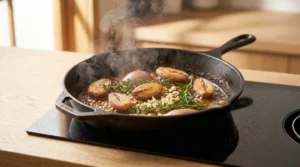
- Add Chicken and Apples Nestle chicken skin-side up into glaze. Skin must sit above liquid line not submerged. Add apple wedges around chicken. Transfer to 425°F oven
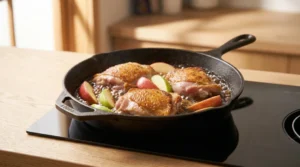
- Roast Roast 20 to 25 minutes until internal temperature reads 165°F per USDA safe minimum cooking temperatures, skin is golden, and glaze is sticky at pan edges.
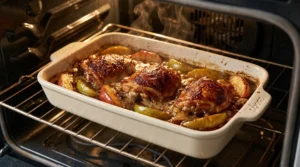
- Reduce Glaze Remove chicken and apples to serving plate. Return pan to medium-high heat. Add butter. Simmer 1 to 2 minutes until glaze is sticky and coats a spoon. If still thin: add cornstarch slurry (1 tsp cornstarch + 1 tbsp cold water) and stir thickens in 30 seconds.
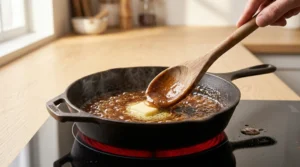
- Rest and Serve Spoon reduced glaze over chicken and apples. Rest 5 minutes. Serve with mashed potatoes or wild rice to soak up the glaze.
Notes
Nutrition Info (per serving, 1 bone-in thigh with glaze)
| Nutrient | Amount |
|---|---|
| Calories | 348 |
| Protein | 26g |
| Fat | 18g |
| Carbohydrates | 22g |
| Sodium | 480mg |
| Fiber | 1g |
| Sugar | 18g |
Nutrition information is an estimate and may vary depending on the ingredients and brands used. Data sourced from USDA FoodData Central.
FAQs
Q: What apple cider is best for glazed chicken?
A: Unfiltered fresh-pressed apple cider produces the most complex, deeply fall-flavored glaze it has natural tannins and tartness that filtered apple juice cannot replicate. Store-bought unfiltered apple cider is an excellent everyday choice. Avoid filtered clear apple juice it produces a flat, overly sweet glaze. Dry hard cider works for an adult version with slightly more complexity.
Q: Why is my apple cider glaze too thin?
A: Two options simmer 2 more minutes in the pan after removing the chicken, or add a cornstarch slurry (1 tsp cornstarch mixed with 1 tbsp cold water) to the simmering glaze and stir for 30 seconds. The cornstarch fix is faster and more reliable. Ensure unfiltered cider was used filtered apple juice produces thinner results regardless of reduction time. apple cider nutritional information via USDA
Q: Which apples work best with chicken?
A: Honeycrisp and Granny Smith are the top choices. Honeycrisp holds its shape well and adds complex sweetness. Granny Smith adds tartness that balances the sweetness of the cider glaze excellent counterpoint. Fuji and Gala soften quickly and can get lost in the dish. Pink Lady is a good middle-ground option.
Q: Can I make this without an oven-safe skillet?
A: Yes sear the chicken in any skillet, then transfer to a baking dish. Add the glaze and shallots to the baking dish, nestle in the chicken and apple wedges, and bake at 425°F for 20 to 25 minutes. Make the pan sauce in a separate small saucepan using the drippings from the baking dish.
Q: How do I keep the chicken skin crispy in the glaze?
A: Keep the skin above the liquid line the glaze should be around and underneath the chicken, not covering the top. The skin crisps from the oven heat above while the bottom absorbs the glaze flavor. Submerged skin always softens during oven cooking regardless of the method.
Q: Can I use boneless skinless chicken thighs?
A: Yes reduce oven time to 15 minutes and check temperature at 12 minutes. The dish loses some richness from the rendered skin fat that would otherwise build flavor in the glaze, but still produces excellent results. Skip the dry sear or sear for only 2 to 3 minutes per side.
About the Author
Written by a home cook who has made apple cider glazed chicken every fall for several years testing apple varieties, cider types, glaze thickening methods, and cooking approaches until landing on the sear-plus-oven method with Dijon mustard that produces the most consistently excellent result.
Would I Make This Again?
Every October without exception and increasingly in September when the first jugs of fresh apple cider appear at the farmers market.
The Dijon mustard addition happened after a batch that tasted slightly flat despite being well-executed. One tablespoon changed the flavor profile so noticeably that it went into every batch from that point on. The Granny Smith switch happened after a Fuji batch where the apple pieces disappeared entirely into the glaze. Two small changes dramatically better dish.
Apple cider glazed chicken thighs done right taste like fall in a way that very few recipes achieve. That is what keeps this in the annual rotation.
Final Note:
Sticky, golden, deeply fall-flavored chicken thighs with caramelized shallots and tender apple wedges the Dijon in the glaze, the sear-plus-oven method, and the Honeycrisp or Granny Smith apple choice are what make this recipe consistently excellent.
Sear golden, build the glaze in the same pan, add chicken and apples, finish in the oven, reduce the pan drippings. That is the whole method.
Made this? Save this recipe for apple season and drop a comment below. Honeycrisp or Granny Smith, and did you try the maple variation? Pin this before fall hits.

2 Comments