Best Chicken Shawarma at Home Middle Eastern Style
Chicken shawarma is easy to love at a street stall and surprisingly easy to get wrong at home. The usual result is pale, slightly steamed chicken, basically roast chicken in a spice coat, instead of the dark, crisp edges and juicy centre you get from a spit.
This homemade chicken shawarma recipe fixes the two things that cause that. One is heat: shawarma gets its character from fierce, direct heat that chars the outside while the inside stays tender, and a home oven at 180°C (350°F) just doesn’t do that. The other is the cut. Breast is lean and dries out quickly when you push the heat up, so this recipe uses thighs.
Because this is raw chicken sitting in a marinade for hours, food safety matters as much as flavour. It has its own section below, and it’s worth reading even if you cook chicken all the time.
Why This Chicken Shawarma Gets Char Without a Spit
A real shawarma spit stacks marinated meat in a tall cone that turns in front of a roaring heat source, so the outer layer is constantly being seared and shaved off. You can’t replicate the cone at home, but you can replicate what it does: very high, direct heat on pieces with plenty of surface area.
That’s why this recipe uses boneless thighs, a sheet pan with space between the pieces, and a hot oven finished with a couple of minutes under the broiler (grill, if you’re in the UK). Thighs have enough fat to survive that treatment and stay juicy. Crowding the pan is the one thing that undoes it, because the chicken releases moisture and ends up steaming in its own juices instead of browning.
Chicken Shawarma Marinating, Handling and Cooking
This is the part worth reading twice. None of it is complicated, but all of it matters with raw poultry.
Marinate in the fridge, never on the counter.
Raw chicken in a marinade should sit covered in the fridge the whole time, ideally on a lower shelf so nothing can drip onto other food. Both the UK Food Standards Agency and the USDA are clear on this.
Keep marinating time to 4–12 hours.
For safety, raw chicken keeps in the fridge for only a day or two, which is why 24 hours is the outer limit. For texture, this marinade has lemon juice in it, and acid left too long turns the surface of the chicken mushy and chalky. Four hours gives you flavor. Twelve is the sweet spot. Don’t go past 24.
Don’t wash the chicken.
The FSA specifically advises against washing raw chicken because splashing water can spread campylobacter bacteria onto your hands, sink and worktops. Cooking kills the bacteria; washing just moves them around. Pat the chicken dry with paper towel if you want, and bin the paper towel.
Treat the marinade as raw.
Once it’s touched raw chicken, it’s contaminated. Don’t brush it on at the end, don’t spoon it over the cooked chicken, and don’t save it as a sauce. That’s what the separate garlic yogurt sauce is for, made in a clean bowl with a clean spoon.
Separate boards, utensils and tongs.
Use a different board and tongs for raw and cooked chicken, or wash them properly in between. Wash your hands with soap and warm water after handling raw chicken, before you touch anything else in the kitchen.
Cook to 165°F (74°C), and actually check.
Colour isn’t a reliable guide, especially with a spiced, deeply coloured marinade. Use an instant-read thermometer in the thickest part of a few pieces. The USDA’s safe minimum is 165°F (74°C). UK guidance describes the same goal as chicken that’s steaming hot all the way through with no pink meat and clear juices. Thighs actually taste better a little past that, around 175–180°F, because the connective tissue relaxes, but 165°F is your safe floor.
Cool and store leftovers promptly.
Get cooked chicken into the fridge within two hours (one hour if the room is hot). More on that in the storage section.
About This Recipe
This recipe is built around boneless thighs, an 8 to 12 hour yogurt-spice marinade, a very hot oven and a short blast under the broiler to finish. Grill, skillet and air fryer options are covered in the comparison table further down, so you can use whatever equipment you have.
Ingredients
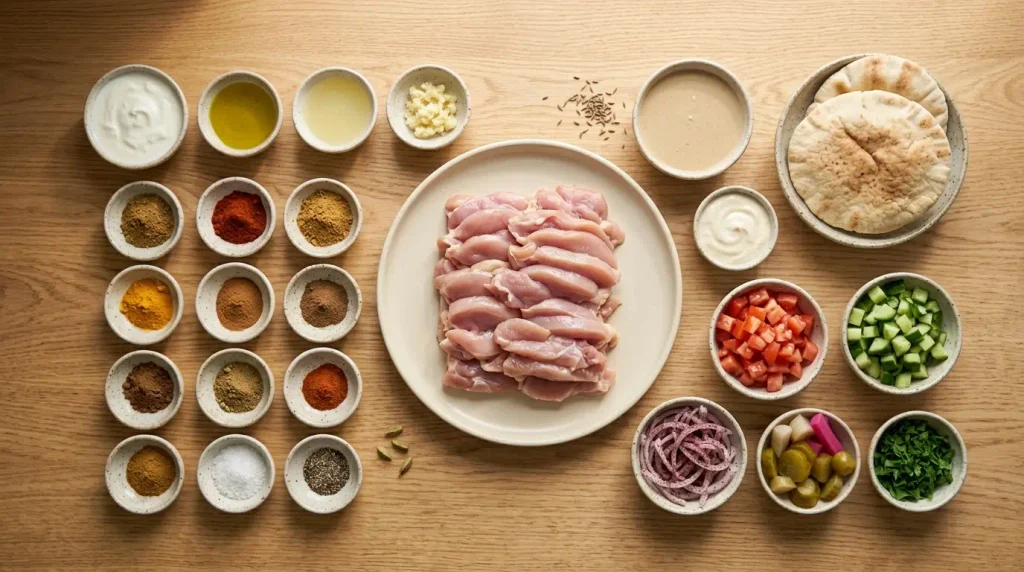
For the Chicken Shawarma:
- Boneless skinless chicken thighs: 900g (2 lb)
- Plain whole-milk yogurt: 150g (⅔ cup)
- Olive oil: 3 tbsp
- Lemon juice: 3 tbsp (about 1 lemon)
- Garlic: 5 cloves, finely grated
- Ground cumin: 2 tsp
- Sweet paprika: 2 tsp
- Ground coriander: 1 tsp
- Ground turmeric: 1 tsp
- Ground cinnamon: ½ tsp
- Ground allspice: ½ tsp
- Ground cardamom: ¼ tsp
- Cayenne pepper: ¼ tsp, more if you like heat
- Fine salt: 1½ tsp
- Black pepper: ½ tsp
For the Garlic Yogurt Sauce:
- Plain yogurt: 200g (¾ cup)
- Garlic: 1 small clove, finely grated
- Lemon juice: 1 tbsp
- Tahini: 1 tbsp (optional)
- Salt: a pinch
To Serve:
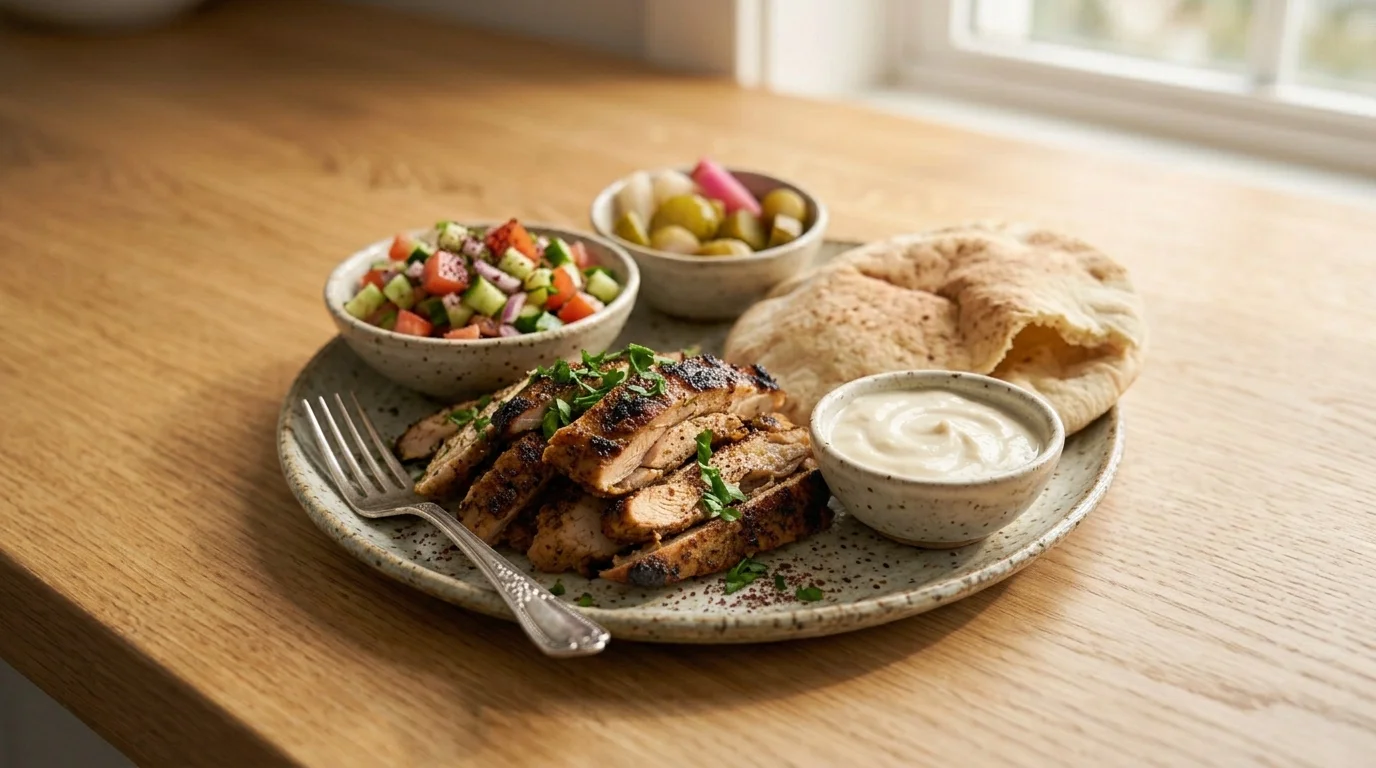
- Pita or flatbreads, sliced tomato, cucumber, thinly sliced red onion tossed with a little sumac, pickles, fresh parsley
Ingredient Substitutions
Chicken breast works, but it’s the less forgiving cut here. Slice it into thick strips rather than cooking whole breasts, and pull it out at 165°F (74°C) exactly, because there’s no fat to cover a couple of minutes of overcooking.
No allspice or cardamom? Leave them out and add a pinch more cumin and cinnamon. It’ll be a little less layered, but still good. A ready-made shawarma spice mix (about 2 tablespoons) can replace the individual spices if you have one.
Dairy-free? Use a thick, unsweetened coconut or soy yogurt. The tenderising effect is gentler, so the chicken will be slightly less soft, but the flavour holds up.
Greek yogurt is fine for the marinade, just thin it with a tablespoon of water so it coats rather than clumps.
Step-by-Step Instructions
Step 1: Mix the Marinade
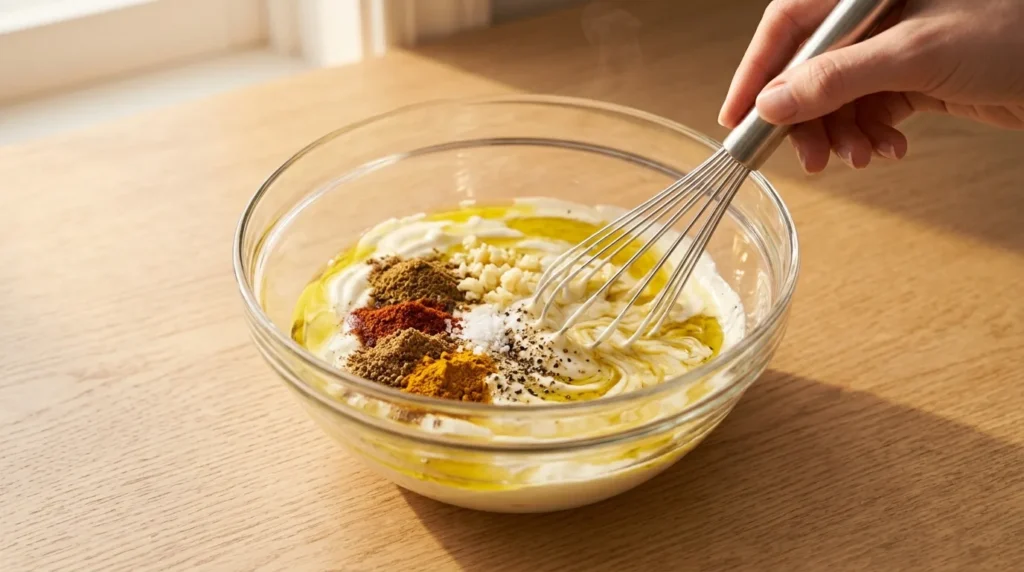
In a large glass bowl or a zip-top bag, whisk together the yogurt, olive oil, lemon juice, garlic, spices, salt and pepper. Use glass, ceramic or plastic rather than a reactive metal bowl, since the lemon can react with some metals and give a metallic taste.
Step 2: Marinate the Chicken
Add the chicken thighs and turn to coat every piece. Cover tightly (or seal the bag, pressing out the air) and put it straight into the fridge, on a low shelf. Marinate for 4 to 12 hours. Wash your hands, and anything the raw chicken touched, before moving on.
Step 3: Heat the Oven
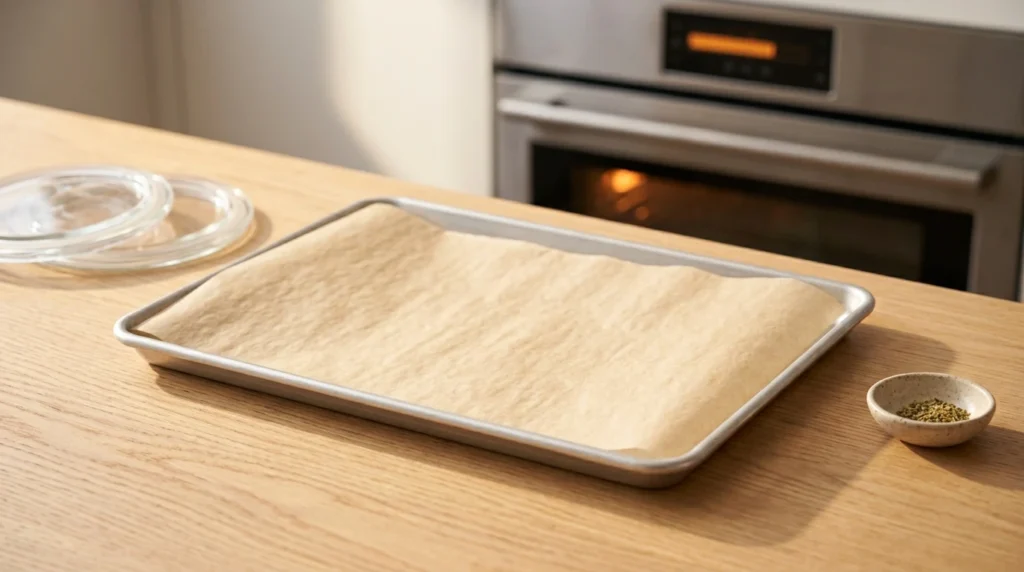
When you’re ready to cook, heat the oven to 230°C (450°F), or 210°C fan. Line a large baking sheet with foil or baking parchment, and set a wire rack on top if you have one. Skip the “let it come to room temperature” step you’ll see in some recipes. There’s no real flavour benefit, and keeping raw chicken out of the fridge longer than it needs to be just adds risk. Cook it straight from the fridge and add a couple of minutes if needed.
Step 4: Arrange the Chicken
Lift the thighs out of the marinade, letting the excess drip off, and lay them on the sheet in a single layer with space between each piece. Throw away the leftover marinade and wash your hands. Don’t be tempted to pour it over the tray.
Step 5: Roast
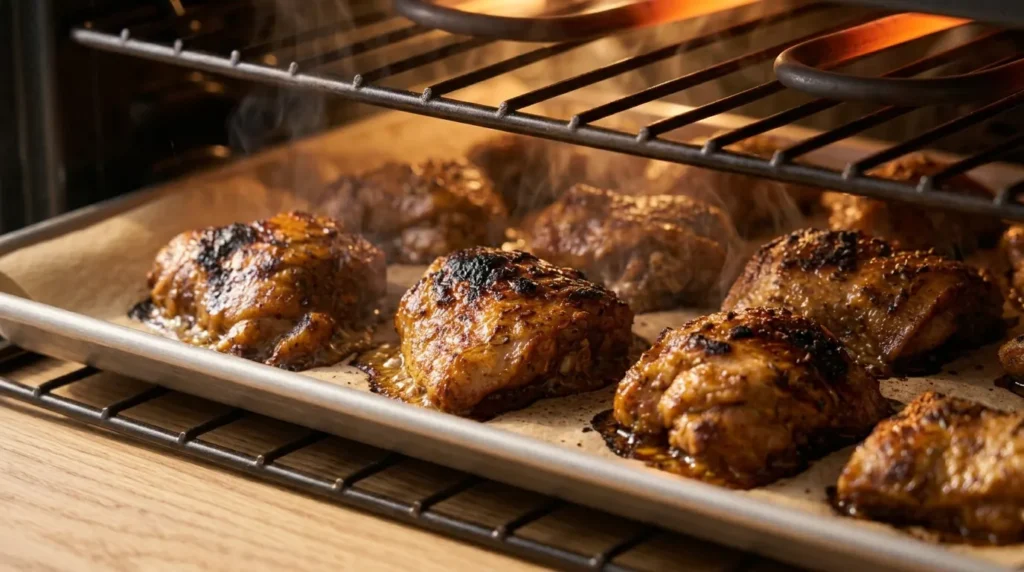
Roast for 20 to 25 minutes, flipping once halfway, until the edges are starting to darken and the thickest piece reads at least 165°F (74°C). Check a few different pieces, not just one.
Step 6: Broil for Char
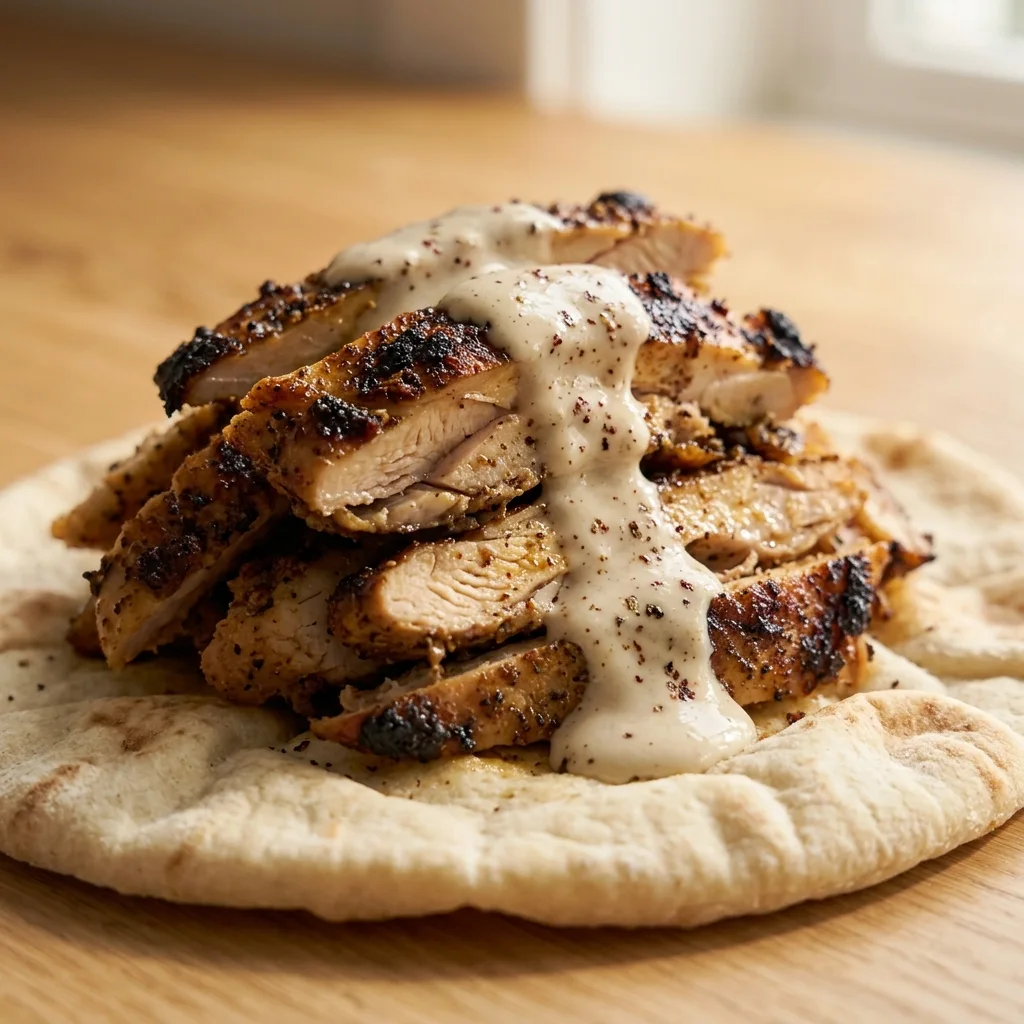
Switch the oven to broil (grill) on high, move the tray up to the top third, and cook for 2 to 3 minutes, watching closely. The yogurt and spices can go from charred to burnt in about 30 seconds, so don’t walk away. This is the step that gets you closer to the charred edges of spit-roasted shawarma.
Step 7: Rest and Slice
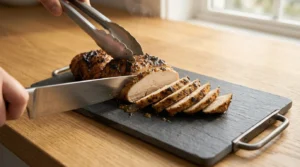
Rest the chicken for 5 minutes, then slice it thinly against the grain. Resting lets the juices settle so they stay in the meat rather than running onto the board.
Step 8: Make the Garlic Yogurt Sauce
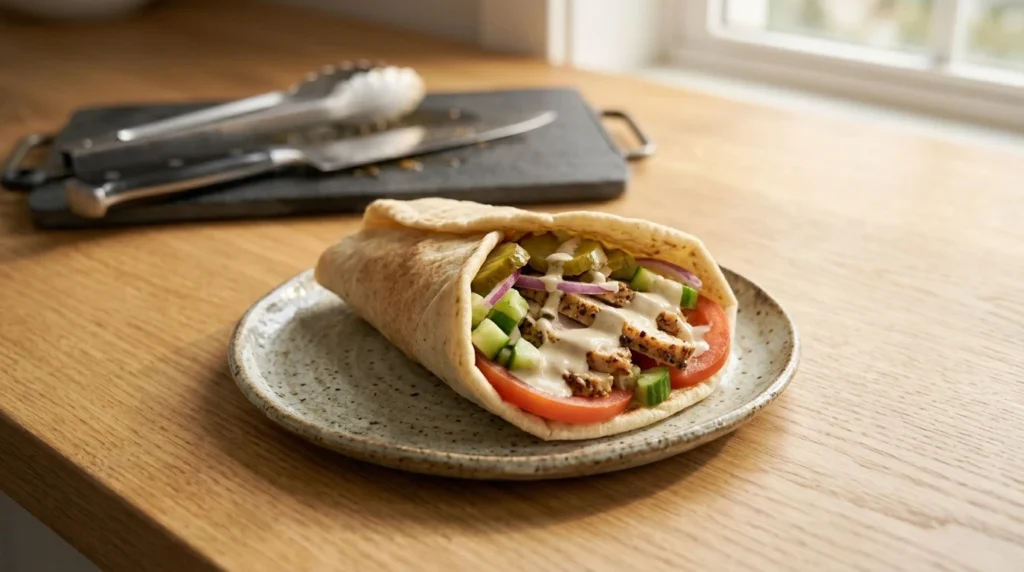
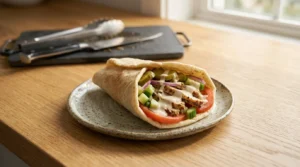
While the chicken roasts, stir together the yogurt, grated garlic, lemon juice, tahini and salt in a clean bowl with a clean spoon. Let it sit in the fridge for 15 minutes so the garlic mellows slightly. Serve the chicken in warm pita with the sauce, tomato, cucumber, red onion and pickles.
Common Chicken Shawarma Mistakes (and How to Fix Them)
Mistake 1: Using chicken breast at a moderate oven temperature.
It tends to come out pale, dry and stringy. The cut and the heat matter more than the spice blend, so use thighs, or watch breast strips closely with a thermometer.
Mistake 2: Marinating for too long with plenty of lemon.
Acid keeps working on the meat the whole time it sits there, and the surface can turn mealy and chalky. More time isn’t better, so stay within 4 to 12 hours.
Mistake 3: Crowding everything onto one tray.
When the pieces touch, the tray floods with liquid and the chicken steams instead of charring. Splitting it across two trays is the easiest improvement you can make.
Mistake 4: Judging doneness by colour.
The dark spice coating makes it hard to tell by eye. Check the thickest piece with an instant-read thermometer every time, for both doneness and safety.
Thighs vs Breast for Shawarma
| Cut | Texture | Char tolerance | Verdict |
|---|---|---|---|
| Boneless thighs | Juicy, tender, forgiving | Handles high heat well | Best choice for shawarma |
| Breast (thick strips) | Leaner, dries out quickly | Little room for error | Works if you watch the temperature closely |
Oven vs Grill vs Skillet vs Air Fryer
Times are estimates and depend on piece size and your appliance. Whichever method you use, cook until the thickest piece reaches 165°F (74°C).
| Method | Char | Ease | Notes |
|---|---|---|---|
| Oven + broiler | Good | Easy | The method used here, reliable for most kitchens |
| Grill / BBQ | Best | Moderate | Closest to real shawarma, watch for flare-ups from the marinade |
| Cast iron skillet | Very good | Moderate | Cook in batches so the pan stays hot |
| Air fryer | Good | Easy | Smaller batches. Cook at 200°C (400°F) for about 12 to 15 minutes, until the thickest piece reaches 165°F (74°C) |
Pro Tips
- Pat the thighs lightly dry after lifting them from the marinade if there’s a lot of yogurt clinging on. A thin coating chars, a thick one steams.
- Use two trays rather than one. It sounds fussy, but it’s the difference between charred and steamed.
- Slice the chicken thin and against the grain. It’s what makes it feel like shawarma rather than baked chicken pieces.
- Taste the garlic sauce before serving. Raw garlic varies a lot in strength, and one clove can be plenty or not nearly enough.
- Wash the tray, board and tongs you used for the raw chicken before they touch anything cooked.
Variations
Grilled Chicken Shawarma: Cook on a grill over medium-high heat for 5 to 6 minutes per side, turning once, to the same 165°F (74°C) minimum.
Shawarma Bowls: Skip the pita and serve over rice or salad with the same toppings and sauce.
Spicier Version: Double the cayenne and add a teaspoon of chilli flakes to the marinade.
Skewered Shawarma: Thread the chicken onto skewers after marinating, which gives you more charred surface area per piece.
Lighter Version: Use skinless thighs trimmed of visible fat, or use breast strips with a careful eye on the thermometer.
What to Serve With
- Warm pita or flatbreads, a simple chopped salad, and pickles
- Best Grilled Chicken Thighs — Perfectly Juicy Every Time for the grill method in more detail
- Best Easy Grilled Chicken Marinade — 5 Ingredients if you want a simpler marinade for another night
- Best Air Fryer Chicken Thighs — Perfectly Crispy in 20 Minutes for a faster, smaller-batch option
- Best One Pan Chicken and Rice — Dinner Ready in 30 Minutes for an easy weeknight alternative
- Best Chicken Curry From Scratch — UK-Style Comfort for another spiced chicken dinner
Storage and Reheating
Get it in the fridge fast
Cooked chicken should go into the fridge within two hours of coming out of the oven, or within one hour if the room is hot (above about 32°C / 90°F). Dividing it into shallow containers helps it cool quickly.
Fridge:
Up to 3 to 4 days in an airtight container.
Reheat:
Heat the chicken until it reaches 165°F (74°C) in the thickest part, checked with a thermometer rather than by eye, in a hot oven, a skillet or an air fryer. Repeated reheating dries it out, so only reheat what you’ll eat. A microwave works for speed, but it won’t bring back the crisp edges.
Freeze (cooked):
For best quality, use within 2 to 3 months (food kept constantly frozen stays safe, but quality declines over time). Thaw overnight in the fridge, never on the counter, then reheat to 165°F (74°C), checking with a thermometer.
Freeze (raw, in the marinade):
You can freeze the chicken in its marinade, which gives you a ready-to-cook meal later. For best quality, use it within a few months. Thaw it in the fridge, not at room temperature, and cook it within a day of thawing.
Garlic yogurt sauce:
Keep it refrigerated and use it within a few days, and discard it if it has been left at room temperature for an extended period. It’s made with raw garlic and dairy, so don’t leave it out on the table through a long meal. A small note if you ever make toum, the Lebanese garlic sauce: garlic blended with oil should be kept refrigerated and used quickly, since homemade garlic-in-oil mixtures stored at room temperature carry a botulism risk.
Best Chicken Shawarma at Home Middle Eastern Style
Ingredients
Equipment
Method
- Mix the Marinade Whisk yogurt, oil, lemon juice, garlic, spices, salt and pepper in a glass bowl or bag.
- Marinate Add the chicken, coat well, cover and refrigerate for 4 to 12 hours. Never marinate at room temperature.
- Heat the OvenHeat to 230°C (450°F). Line a baking sheet.
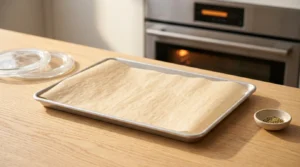
- Arrange Lift chicken out, shake off excess, lay in a single layer with space between pieces. Discard the leftover marinade.
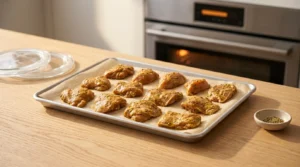
- Roast Roast 20 to 25 minutes, flipping once, until at least 165°F (74°C) in the thickest part.
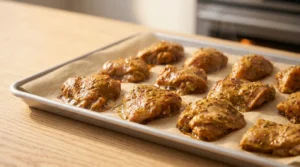
- Broil Broil 2 to 3 minutes until charred at the edges. Watch closely.
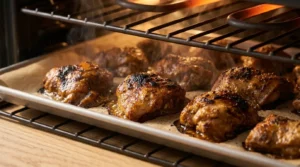
- Rest and Slice Rest 5 minutes, then slice thinly against the grain.
- Sauce and Serve Stir the sauce ingredients together in a clean bowl. Serve the chicken in warm pita with sauce, tomato, cucumber, red onion and pickles.
Notes
Nutrition Info(per serving, based on 6 servings, chicken only)
Nutrition per serving depends on how much marinade stays on the chicken and what you serve it with, so it isn’t listed as a fixed number here. Use the recipe card’s nutrition calculator with your own ingredient brands for the most accurate figures.
| Nutrient | Amount |
|---|---|
| Calories | 210 |
| Protein | 30g |
| Fat | 9g |
| Carbohydrates | 2g |
FAQs
Q: How long can I marinate chicken shawarma?
A: Between 4 and 12 hours in the fridge is the recommended range for texture. 24 hours is the outer limit, because raw chicken only keeps a day or two in the fridge. The lemon juice can make the chicken mushy or chalky if it goes much longer than 12 hours.
Q: Can I reuse the marinade as a sauce?
A: No. Once it’s touched raw chicken it’s contaminated, and the only way to use it safely would be to boil it hard, which you’d be better off skipping. Make the garlic yogurt sauce separately instead.
Q: Should I wash the chicken before marinating it?
A: No. Both the UK Food Standards Agency and the USDA advise against washing raw chicken, because splashing water can spread bacteria around your kitchen. Cooking it properly is what makes it safe.
Q: What temperature should chicken shawarma reach?
A: At least 165°F (74°C) in the thickest part, per USDA guidance. Thighs are best at 175–180°F for tenderness.
Q: Can I make chicken shawarma without an oven?
A: Yes. A hot cast iron skillet or a grill both work well, cooked in batches so the pan doesn’t cool down and steam the chicken. Check the thickest piece with an instant-read thermometer; it should reach 165°F (74°C).
Q: Why isn’t my chicken shawarma charred?
A: Usually the oven isn’t hot enough, or the tray is crowded. Use 230°C (450°F), spread the chicken in a single layer on two trays if needed, and finish under the broiler.
Q: Can I make it ahead for a party?
A: Marinate the chicken the night before and cook it fresh on the day. If you cook it ahead, cool it quickly, refrigerate it, and reheat it until steaming hot.
Q: Can I use frozen chicken?
A: Thaw it fully in the fridge first, then marinate. Marinating chicken that’s still partly frozen doesn’t work well, and thawing at room temperature isn’t safe.
Is Chicken Shawarma Worth Making at Home?
Yes, especially as a make-ahead dinner. Put the chicken in the marinade in the morning and dinner is mostly done by the evening. The broiler step and the thermometer are the two habits that turn this from fine into properly good, and both are small enough that there’s no reason to skip them.
Final Note
Good chicken shawarma at home comes down to a few simple decisions: use thighs, give the marinade time but not too much, cook it hot on an uncrowded tray, and treat the raw chicken with proper care from fridge to table. None of it is hard, and the result is a properly charred, juicy home version of shawarma.
Made this? Tell me in the comments whether you went for the oven or the grill, and how you served it.