
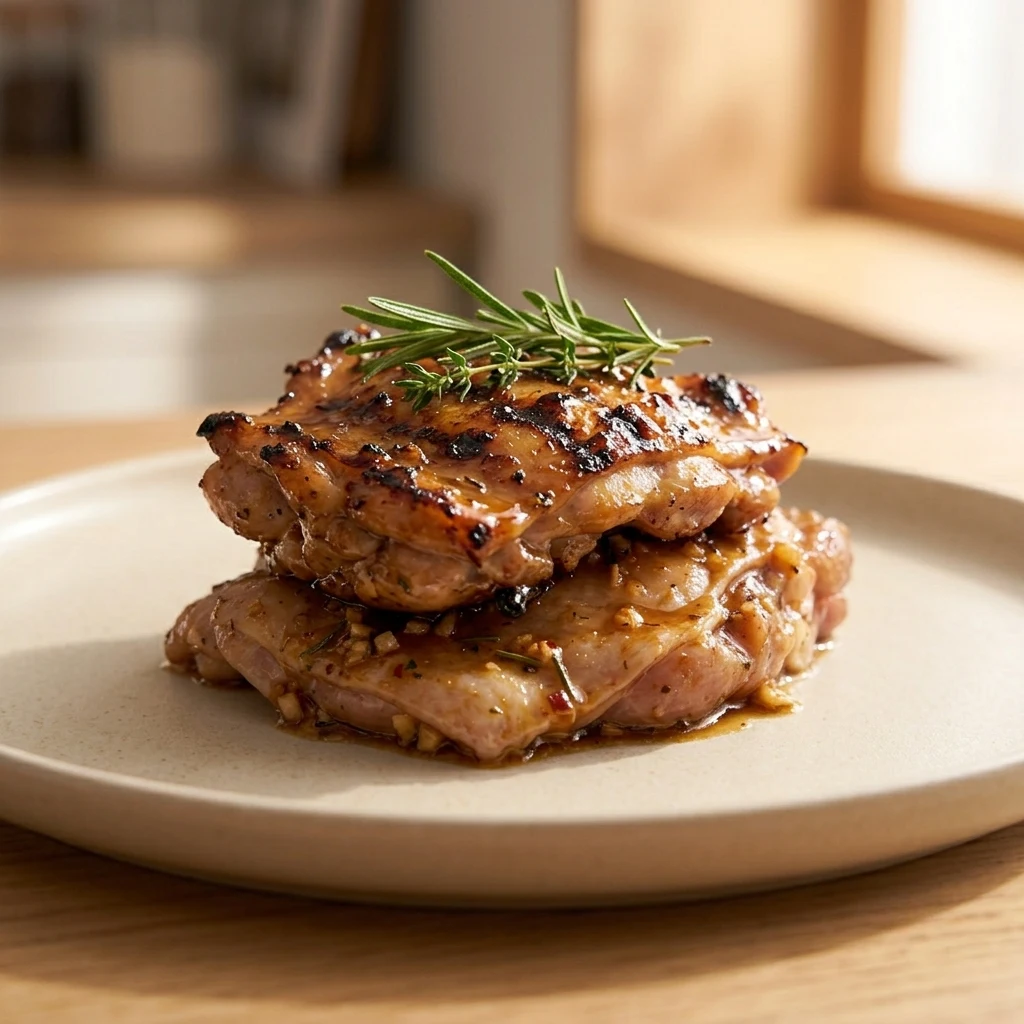
Best Easy Grilled Chicken Marinade — 5 Ingredients
The marinade that changed everything in this kitchen came from a neighbor at a summer cookout four years ago.
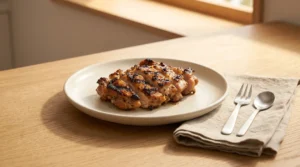
The chicken was juicy, deeply flavored, and had that slightly charred exterior that most grilled chicken never quite achieves at home. When asked what was in it, the answer was surprisingly simple five pantry ingredients that had been sitting in the cabinet the whole time.
That easy grilled chicken marinade has been on rotation ever since. Over time it got tested against more complicated versions with fresh herbs, citrus, and specialty ingredients. The five-ingredient version won almost every comparison not because simple is always better, but because the ratios in this particular combination hit every element a good marinade needs.
Here is the full method including the timing guide, the cut-by-cut breakdown, and the freezer trick that makes weeknight grilling genuinely easy.
The Science Behind a Good Marinade (In Plain Terms)
Every effective marinade has three components working together:
Acid — breaks down surface proteins, allowing flavor to penetrate and helping the chicken stay moist during high heat. Examples: lemon juice, vinegar, soy sauce, yogurt.
Fat — carries fat-soluble flavors into the meat and creates a barrier that slows moisture loss on the grill. Examples: olive oil, avocado oil, sesame oil.
Flavor — the aromatics, spices, and seasonings that define the taste. Examples: garlic, paprika, herbs, honey, mustard.
The ratio that produces the best balance for grilling: roughly 1 part acid to 3 parts oil, with flavor elements added to taste. Too much acid and the surface protein breaks down past the point of texture the chicken becomes slightly mushy on the outside. Too little acid and the marinade does not penetrate or tenderize effectively.
About This Recipe
This easy grilled chicken marinade was tested with fresh lemon juice vs bottled, fresh garlic vs powder, olive oil vs avocado oil, and marinating times from 15 minutes to 24 hours across four different chicken cuts. The version below produced the most consistent results across every test.
Ingredients
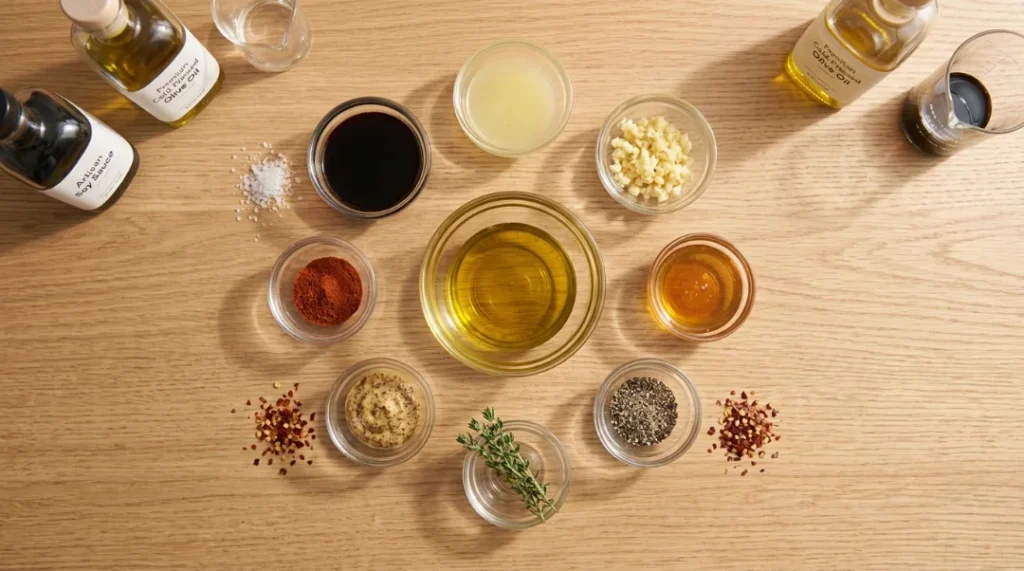
- Olive oil — 3 tbsp (the fat base avocado oil works equally well)
- Soy sauce — 2 tbsp (salt + umami + acid all in one ingredient the secret to depth without complexity)
- Lemon juice — 1 tbsp (freshly squeezed bottled works but fresh is noticeably brighter)
- Garlic — 3 cloves, minced (fresh garlic outperformed garlic powder in every test)
- Honey — 1 tbsp (encourages caramelization on the grill and balances the acid)
Optional additions that elevate without complicating:
- Smoked paprika — ½ tsp
- Dijon mustard — 1 tsp (emulsifies the marinade and adds subtle tang)
- Black pepper — ½ tsp
- Fresh thyme or rosemary — 1 sprig
Why Soy Sauce is the Secret Ingredient
Most five-ingredient marinades use either soy sauce or lemon juice rarely both. Soy sauce does something neither ingredient alone can do: it provides salt, umami depth, and a mild acid all in one. It also contains natural sugars that help browning on the grill.
The combination of soy sauce plus a small amount of lemon juice gives the marinade both savory depth and brightness without either flavor dominating. Testing soy-sauce-only vs lemon-only vs both together the combined version won every time.
Ingredient Substitutions
No fresh lemon? Rice vinegar (1 tsp) or apple cider vinegar (½ tbsp) work well. Bottled lemon juice works but the flavor is noticeably less bright.
No honey? Maple syrup is a direct substitute. Brown sugar (1.5 tsp dissolved in the oil) also works slightly less caramelization but very similar flavor.
Soy sauce alternatives: coconut aminos for gluten-free (same amount, slightly less salty). Tamari for gluten-free with closer flavor to soy sauce.
No fresh garlic? Garlic powder (½ tsp) works in a time crunch but the depth is noticeably less. Fresh garlic penetrates the meat differently than powder the difference is most noticeable after longer marinating times.
How Long to Marinate The Critical Guide
This is the most commonly misunderstood part of chicken marinades. More time is not always better.
| Cut | Minimum | Sweet Spot | Maximum |
|---|---|---|---|
| Chicken breast | 15 min | 1–2 hours | 4 hours |
| Chicken thighs (boneless) | 30 min | 2–4 hours | 8 hours |
| Chicken thighs (bone-in) | 1 hour | 4–8 hours | 12 hours |
| Chicken wings | 30 min | 2–4 hours | 8 hours |
| Whole chicken pieces | 2 hours | 8–12 hours | 24 hours |
Why maximum times matter: the acid in the marinade both the lemon juice and the soy sauce continues breaking down surface proteins past the point of tenderizing. Chicken breast marinated for 8 hours in an acid-heavy marinade develops a slightly mushy, almost mealy surface texture. The inside is fine. The outside suffers.
Bone-in pieces and thighs tolerate longer marinating because there is more fat and connective tissue to buffer the acid. Breast meat has almost none.
Step-by-Step Instructions
Step 1: Make the Marinade
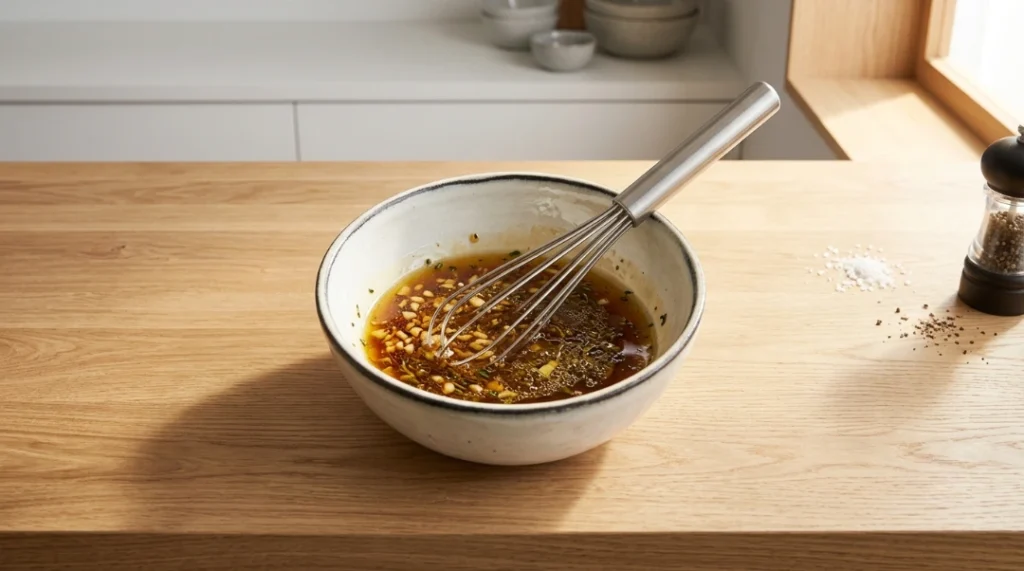
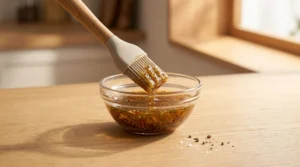
Combine olive oil, soy sauce, lemon juice, minced garlic, and honey in a bowl or measuring cup. Whisk until the honey is fully dissolved and the mixture looks slightly emulsified. Add any optional ingredients.
Taste the marinade before adding chicken. It should be savory, slightly sweet, with a background brightness from the lemon. Adjust: more honey if too sharp, more lemon if too flat, more soy sauce if it needs salt or depth.
Step 2: Marinate the Chicken
Place chicken in a zip-lock bag or shallow dish. Pour marinade over and turn to coat all surfaces. Press out as much air as possible from the bag chicken submerged in marinade with minimal air exposure marinates more evenly.
Refrigerate for the appropriate time based on the cut guide above. Flip the bag or turn the chicken halfway through for even coverage.
Step 3: Remove and Dry Before Grilling
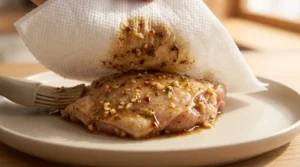
Remove chicken from marinade and pat lightly dry with paper towels. Do not rinse.
This step surprises most people the instinct is to keep all that marinade on the surface. But excess liquid on the chicken surface creates steam when it hits the grill rather than allowing direct char development. A light pat-dry produces better grill marks and more even browning. The flavor has already penetrated the meat the surface moisture is not needed.
Step 4: Grill at the Right Temperature
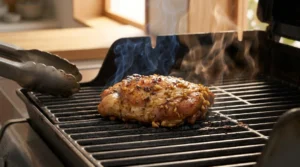
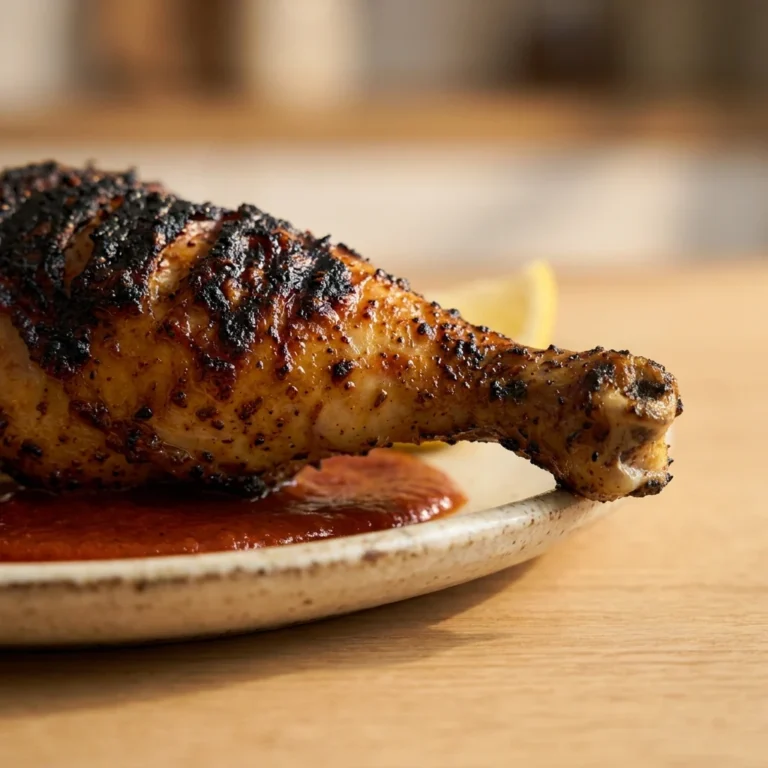
Medium-high heat (around 400°F to 425°F) is the sweet spot for marinated chicken. High enough to develop char quickly, low enough to give bone-in pieces time to cook through.
The honey in the marinade means the surface will brown faster than unmarinated chicken. Watch the first 3 minutes closely if the exterior is coloring too fast, move to indirect heat to finish.
Step 5: Do Not Reuse the Marinade
Raw chicken marinade contains bacteria from the raw meat. Do not use it as a basting sauce or dipping sauce after the chicken has been in it.
If you want a basting sauce from the same ingredients, set aside ¼ cup of fresh marinade before adding the chicken. Use that reserved portion for basting during the last 2 to 3 minutes of grilling.
Step 6: Rest Before Slicing
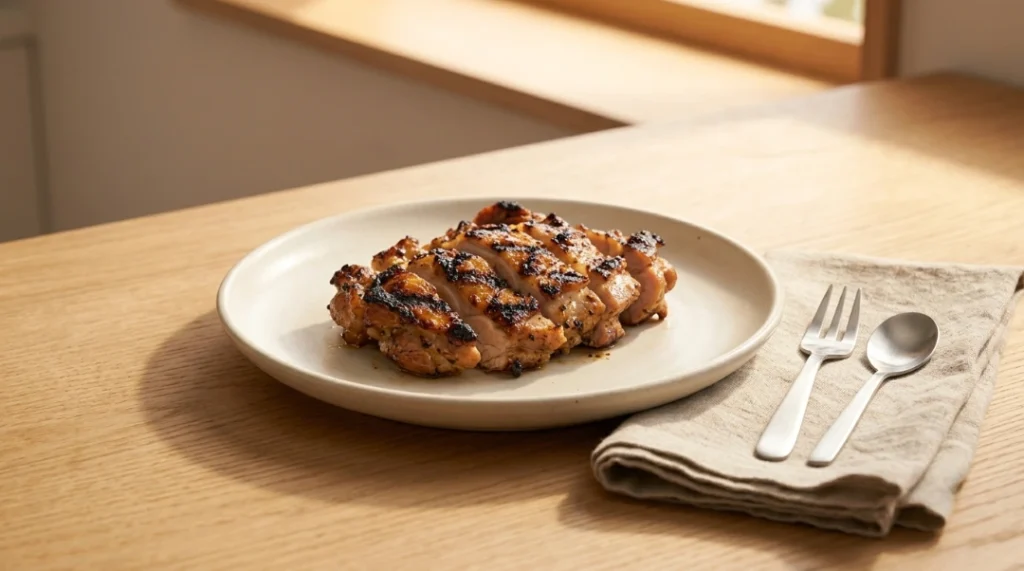
Rest grilled chicken for 5 minutes before cutting. The juices redistribute through the meat during this time. Cutting immediately releases them.
The Freezer Marinade Method Biggest Time Saver
This is the little-known trick that makes weeknight grilling genuinely easy and most sites never mention it.
Place raw chicken and marinade together in a zip-lock bag, press out the air, and freeze immediately. The chicken marinates as it thaws in the fridge overnight by the time it is ready to grill, it has absorbed 8 to 12 hours of flavor with zero extra effort.
This method works especially well for bone-in thighs, drumsticks, and wings cuts that benefit from longer marinating and tolerate overnight thawing well. It transforms a 4-hour prep recipe into a 5-minute Sunday task that makes Monday through Thursday grilling completely effortless.
What Went Wrong in Early Testing
Batch 1: Marinated chicken breast for 6 hours. The flavor was excellent. The surface texture was slightly off a bit soft and mealy at the edges rather than firm and juicy. Reduced breast marinating time to 1 to 2 hours maximum from that point on.
Batch 2: Left the marinade on the surface without patting dry. Steaming rather than searing for the first 2 minutes on the grill. The char took longer to develop and the grill marks were faint and patchy. Light pat-dry before grilling fixed this completely.
Batch 3: Used bottled lemon juice instead of fresh. The marinade tasted fine in the bowl but the brightness was noticeably muted after grilling. Fresh lemon juice holds its flavor better under heat. Switched permanently to fresh.
Yogurt Marinade vs Acid-Based Why They Work Differently
Most easy grilled chicken marinades use citrus or vinegar as the acid. Yogurt marinades work on a completely different mechanism and deserve a separate mention.
Yogurt contains lactic acid a gentler acid than citrus or vinegar. It tenderizes more slowly, which means it can marinate much longer without the surface texture problem. A yogurt-marinated chicken breast can sit for 24 hours and still have a perfectly firm exterior.
Yogurt also creates a coating on the surface of the chicken that insulates slightly against high grill heat which is why yogurt-marinated chicken (like tandoori) can be cooked at very high temperatures without drying out.
For this five-ingredient recipe, the standard acid-based version is faster and produces better grill marks. For overnight or long marinating, replace the lemon juice with 2 tbsp plain whole-milk yogurt and reduce soy sauce to 1 tbsp.
Variations
Honey Garlic: Double the honey and garlic. Add 1 tsp apple cider vinegar. Skip lemon juice. Sticky, sweet, excellent on thighs.
Lemon Herb: Add 1 tsp lemon zest and 1 tsp fresh thyme. Brighten with extra lemon juice. Light and fresh perfect for chicken breast salads.
Spicy Chipotle: Add 1 tsp chipotle powder and ½ tsp cumin. Replace honey with 1 tbsp brown sugar. Bold, smoky, excellent on wings.
Teriyaki Style: Replace lemon juice with 1 tbsp rice vinegar. Add ½ tsp sesame oil and 1 tsp fresh grated ginger. Brush with extra honey in last 2 minutes of grilling.
Mediterranean: Add 1 tsp dried oregano, ½ tsp cumin, and 1 tbsp red wine vinegar in place of lemon juice. Excellent on bone-in thighs
What to Serve With
- Best Grilled Chicken Thighs — Perfectly Juicy Every Time — the grilling method that pairs best with this marinade
- Best Baked Chicken Breast That Never Dries Out — oven version when the grill is not an option
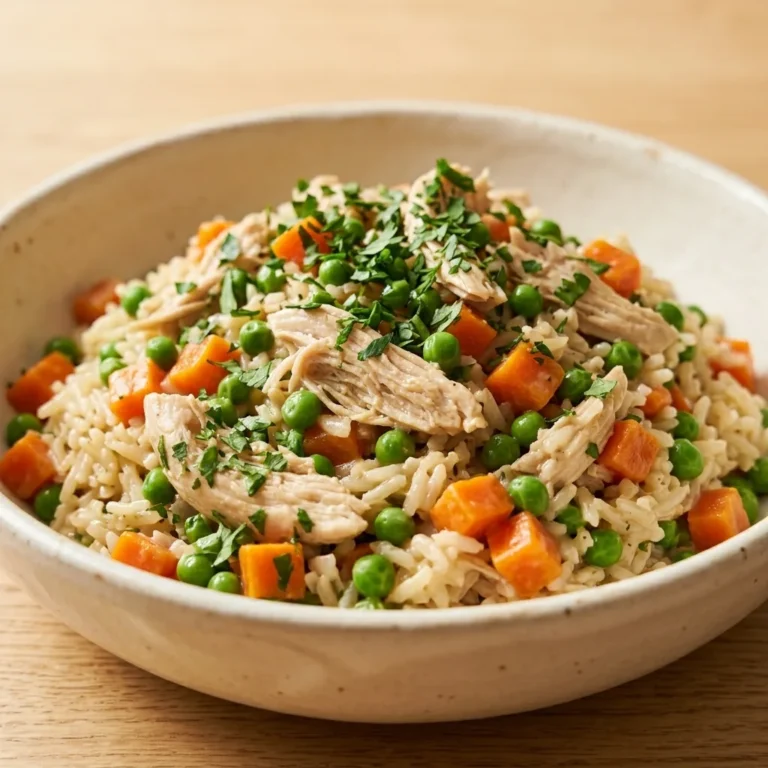
- Best One Pan Chicken and Rice Dinner — if you want everything in one pan
- Grilled corn on the cob cooks on the same grill at the same time
- Simple green salad with lemon vinaigrette the acidity mirrors the marinade
- Garlic butter rice catches all the juices from the rested chicken
Storage
Marinade (unused, before chicken): Up to 1 week in the fridge in a sealed jar. Whisk before using.
Marinated raw chicken: Up to 24 hours in the fridge. Do not exceed recommended times by cut.
Cooked grilled chicken: Up to 4 days in an airtight container.
Freeze-marinade method: Up to 3 months frozen. Thaw overnight in fridge before grilling.
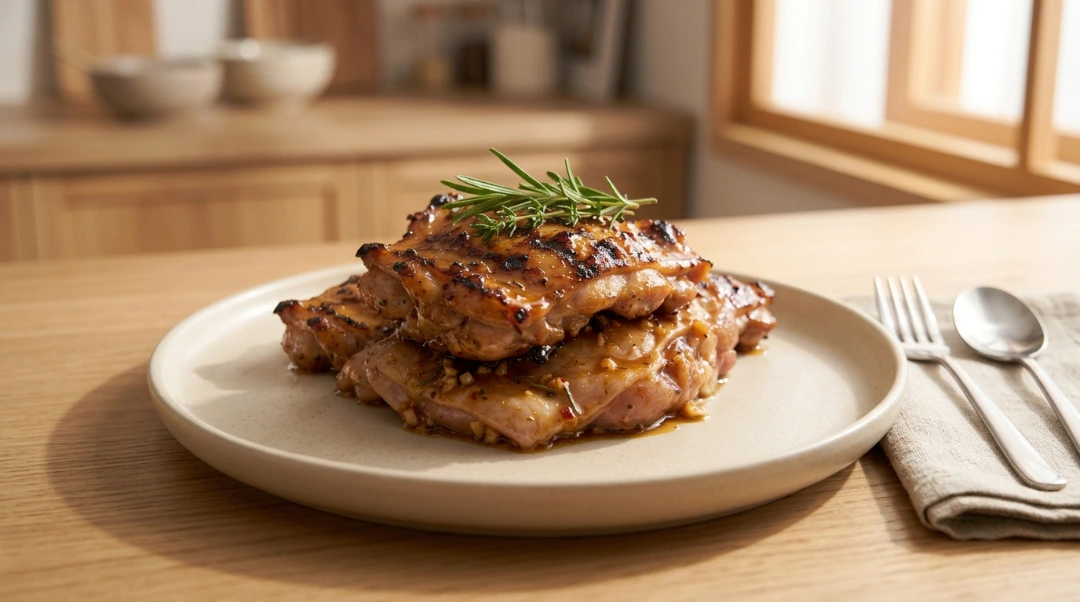
Best Easy Grilled Chicken Marinade — 5 Ingredients
Ingredients
Equipment
Method
- Mix the Marinade Combine olive oil, soy sauce, lemon juice, minced garlic, and honey in a bowl. Whisk until honey dissolves and mixture looks slightly combined. Add optional ingredients if using. Taste and adjust — savory, slightly sweet, bright.

- Marinate the Chicken Place chicken in zip-lock bag. Pour marinade over and turn to coat. Press out air. Refrigerate based on cut: breast 1 to 2 hours, boneless thighs 2 to 4 hours, bone-in thighs 4 to 8 hours. Flip halfway through.
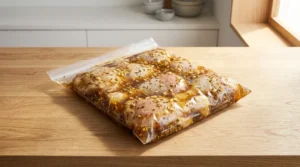
- Pat Dry Before Grilling Remove chicken from marinade. Pat lightly dry with paper towels. Do not rinse. Excess surface liquid creates steam on the grill instead of char — light drying produces better browning and grill marks.
- Grill at Medium-High Grill at 400°F to 425°F. The honey in the marinade means browning happens faster than unmarinated chicken. Check the surface at 3 minutes and move to indirect heat if coloring too quickly.
- Rest Before Serving Rest 5 minutes after grilling. Internal temperature should reach 165°F per USDA safe minimum cooking temperatures. Thighs can go to 170°F to 175°F for more tender results.
- Reserved Basting Sauce If basting sauce is wanted, set aside ¼ cup fresh marinade before adding chicken. Use only this reserved portion to brush on during last 2 to 3 minutes of grilling. Never reuse marinade that has been in contact with raw chicken.
Notes
Nutrition Info (marinade per serving does not include chicken)
| Nutrient | Amount |
|---|---|
| Calories | 68 |
| Fat | 6g |
| Carbohydrates | 4g |
| Sodium | 280mg |
| Sugar | 3g |
| Protein | 0.5g |
Nutrition information is an estimate and may vary depending on the ingredients and brands used. Data sourced from USDA FoodData Central.
FAQs
Q: How long should I marinate chicken for grilling?
A: It depends on the cut. Chicken breast needs only 1 to 2 hours longer with an acid-based marinade starts to break down the surface texture. Bone-in thighs and drumsticks do best with 4 to 8 hours. Wings are good from 2 to 4 hours. The freezer marinade method lets bone-in pieces marinate as they thaw overnight with no extra effort.
Q: Can I reuse chicken marinade as a sauce?
A: Not safely the marinade has been in contact with raw chicken and contains bacteria. To use a version as a basting sauce, set aside ¼ cup of fresh marinade before adding the chicken. That reserved portion is safe to brush on during the last 2 to 3 minutes of grilling.
Q: Why is my marinated grilled chicken not browning properly?
A: Usually the surface is too wet when it hits the grill. Pat the marinated chicken lightly dry before grilling this removes excess liquid that causes steaming rather than searing. Also check grill temperature medium-high (400°F to 425°F) is the sweet spot for marinated chicken.
Q: Does marinating chicken overnight make it mushy?
A: For chicken breast in an acid-heavy marinade, yes the surface protein breaks down past the point of tenderizing after about 4 hours. Bone-in pieces and thighs handle overnight marinating well due to their fat content. For long marinating times with breast meat, switch to a yogurt-based marinade which tenderizes more gently.
Q: Can I marinate chicken at room temperature?
A: For a maximum of 30 minutes only. Beyond that, the USDA recommends marinating in the refrigerator to prevent bacterial growth in the temperature danger zone. See USDA food safety guidelines for reference.
Q: How do I know when grilled marinated chicken is done?
A: Internal temperature is the only reliable method. 165°F minimum at the thickest part for all chicken cuts. Thighs can go to 170°F to 175°F for more tender results. See USDA safe minimum cooking temperatures.
About the Author
Written by a home cook and recipe developer who has tested chicken marinades across multiple cuts, timing windows, and ingredient combinations. Every technique and recommendation in this article reflects real kitchen and grill testing.
Would I Make This Again?
Every grilling season and most of the year with the freezer method.
The five-ingredient version gets made on Sunday mornings when there is chicken to prep for the week. Into the bag, into the freezer, done. By Tuesday or Wednesday evening, the chicken has been thawing and marinating since Monday night. Fifteen minutes on the grill and dinner is genuinely good without any weeknight effort.
The more complicated versions fresh herbs, multiple acids, specialty ingredients get made for occasions. The five-ingredient version gets made for the rest of the time.
Final Note
A surprisingly simple marinade with five pantry ingredients delivers juicy, deeply flavorful grilled chicken that impresses every time. The timing guide, the pat-dry step, and the freezer trick are what separate a good result from a great one.
Mix it, time it right, pat it dry, grill it hot. That is the entire method.
Made this? Save this recipe before your next cookout and drop a comment below. Which variation did you try first, and did you use the freezer method? Pin this so you always have it handy.


One Comment